Free TDEE Calculator, Maintenance & Weight Loss Calories
TDEE Calculator
Your Results
BMR: 0 Cal/day
Maintenance: 0 Cal/day
Goal-Based Calories
Daily Macros
How TDEE Calculator Works
Three simple steps to your daily calorie target.
The TDEE calculator first estimates your BMR, the calories your body burns at rest, using the Mifflin-St Jeor equation. It then multiplies that number by your activity level to give your TDEE. From there, you can choose a calorie target for weight loss, maintenance or muscle gain.

What Is TDEE? (TDEE Meaning Explained)
If you have ever searched what is TDEE, here is the plain answer. The TDEE meaning is simple: it is the total number of calories (kilocalories, or kcal) your body uses over one day.
That total is bigger than most people expect, because it is not just exercise. Your heart, brain, lungs, and digestive system burn energy around the clock. Walking to the shop, cooking dinner, and standing in a queue add to it too.
Take two people who weigh the same. One works at a desk and walks for twenty minutes in the evening. The other is on their feet all day and trains four times a week. Their resting needs are close, yet their total daily energy expenditure can differ by several hundred calories. This is why body weight alone cannot tell you how much to eat.
How to Use Our TDEE Calorie Calculator
This TDEE calorie calculator takes about a minute. Here is how to get an accurate result.
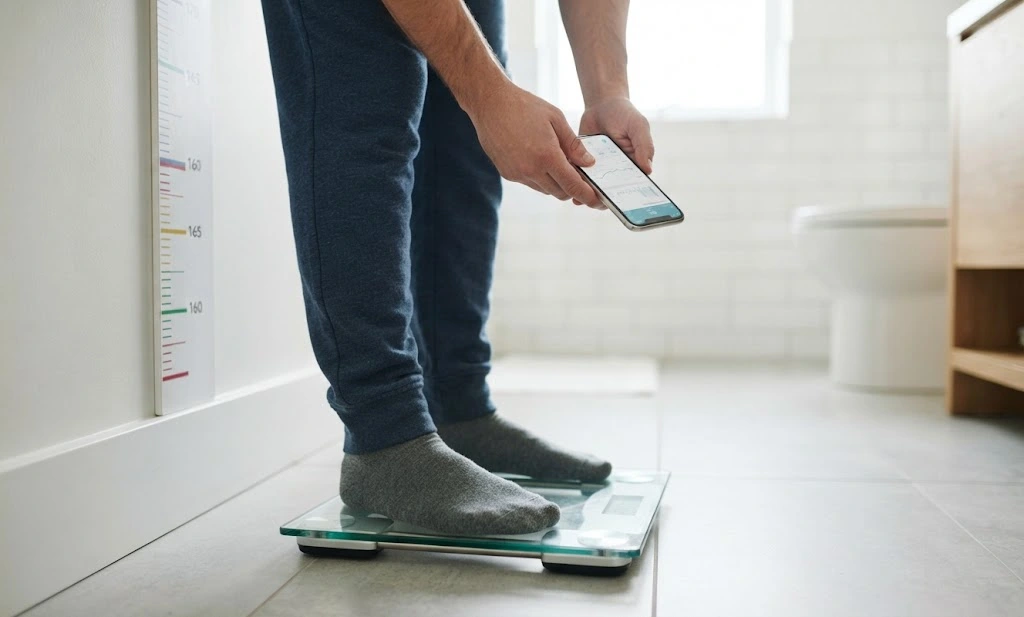
1. Enter your age, height, and weight. Use your current weight, not your goal weight. Check the unit selector so you do not mix pounds with kilograms.
2. Select your sex. The formula uses a sex-based constant because average energy use differs between groups in the original research. It is one input among many, not a full picture of your metabolism.
3. Pick your activity level. This step trips most people up. Think about your whole week, not your best gym day. Three workouts plus a desk job is usually “light” or “moderate,” not “very active.”
4. Read the result as a range. A figure like 2,347 calories is better treated as roughly 2,350. Extra decimals do not make the estimate more accurate.
This tool also works as a BMR and TDEE calculator, because it shows your resting rate first and your total expenditure second.
Activity Level Cheat Sheet
Still unsure which level to pick? Match your normal week to these everyday examples.
- Sedentary (1.2): A student or office worker who walks only a little and has no regular workouts.
- Lightly active (1.375): A desk job plus two or three easy sessions, such as walks, yoga, or light jogging.
- Moderately active (1.55): Regular training three to five days a week, or a job with a lot of walking.
- Very active (1.725): Hard training most days, or a physical job plus workouts.
- Extra active (1.9): Heavy labour plus daily training. Very few people truly fit here.
When two levels seem close, choose the lower one and adjust after a few weeks. Overestimating activity is the most common reason a result feels too generous.
TDEE Calculation Formula: How We Calculate Your Number
Most tools use two steps. First they estimate your resting energy. Then they scale it by activity. The TDEE calculation formula is:
TDEE = Resting energy expenditure × Activity multiplier
This is also the basic total daily energy expenditure formula used by dietitians for quick estimates.
Step 1: Resting Energy with the Mifflin-St Jeor Equation
Our daily energy expenditure calculator uses the Mifflin St Jeor equation, which was built from measured data on adults and is widely used today.
- Men: (10 × weight in kg) + (6.25 × height in cm) − (5 × age) + 5
- Women: (10 × weight in kg) + (6.25 × height in cm) − (5 × age) − 161
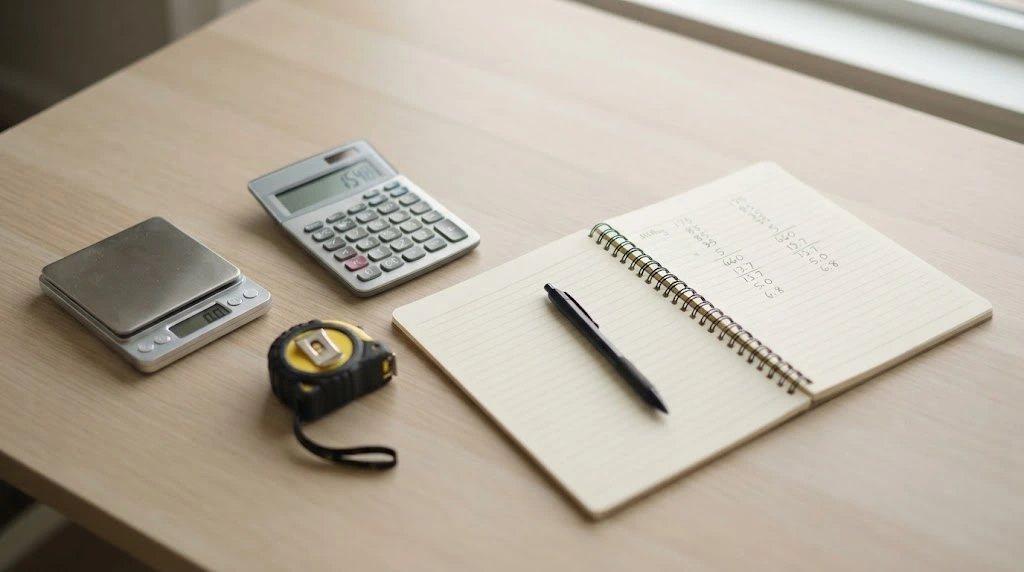
Example (woman): A 30-year-old woman, 70 kg, 165 cm. That is 700 + 1,031 − 150 − 161 = about 1,420 calories at rest.
Example (man): A 28-year-old man, 80 kg, 180 cm. That is 800 + 1,125 − 140 + 5 = about 1,790 calories at rest.
Want the background on this formula? Read our guide to the Mifflin St Jeor equation.
Step 2: Apply Your Physical Activity Level
Your physical activity level (PAL) is the multiplier that turns resting energy into total energy. Here are the common values:
|
Activity Level |
Description |
Multiplier |
|
Sedentary |
Desk job, little exercise |
1.2 |
|
Lightly active |
Light exercise 1-3 days a week |
1.375 |
|
Moderately active |
Exercise 3-5 days a week |
1.55 |
|
Very active |
Hard exercise 6-7 days a week |
1.725 |
|
Extra active |
Physical job plus daily training |
1.9 |
These are conventional calculator values, not clinical measurements.
Woman’s result: 1,420 × 1.375 = about 1,953 calories per day.
Man’s result: 1,790 × 1.55 = about 2,775 calories per day.
Same formula, different inputs, different results. That is the whole system.

TDEE Calculator with Body Fat Percentage (Katch-McArdle)
If you know your body fat, a TDEE calculator with body fat percentage can be a better fit, especially for lean or muscular people. The Katch-McArdle formula uses lean body mass:
Resting energy = 370 + (21.6 × lean body mass in kg)
Example: a person weighing 80 kg with 20% body fat has 64 kg of lean mass. That gives 370 + (21.6 × 64) = about 1,752 calories at rest. Multiply by the activity factor as before. Keep in mind that the result is only as good as your body fat estimate.

What Makes Up Your Total Daily Energy Expenditure?
Four parts add up to your TDEE.
1. Resting Energy
This is the energy your body spends just to stay alive. For many adults it is the largest slice. Our guide to resting metabolic rate explains how it differs from BMR and what affects it.
2. Non Exercise Activity Thermogenesis (NEAT)
Non exercise activity thermogenesis is the energy from everyday movement that is not a workout: pacing during calls, doing chores, taking the stairs, carrying groceries. It varies a lot from person to person, and it is often the easiest part to raise. Short walks after meals count.

Easy Ways to Raise Your NEAT
You do not need extra gym time to move more. Small habits add up across the week.
- Take a ten-minute walk after meals.
- Stand or pace during phone calls.
- Get off one stop early or park a little farther away.
- Choose light chores, such as tidying or gardening, over more sitting.
- Use a daily step goal as a rough guide, then build up slowly.
Raising NEAT is one of the gentlest ways to increase your TDEE. It also suits a calorie deficit, because it rarely leaves you as tired as extra hard workouts.
3. Exercise
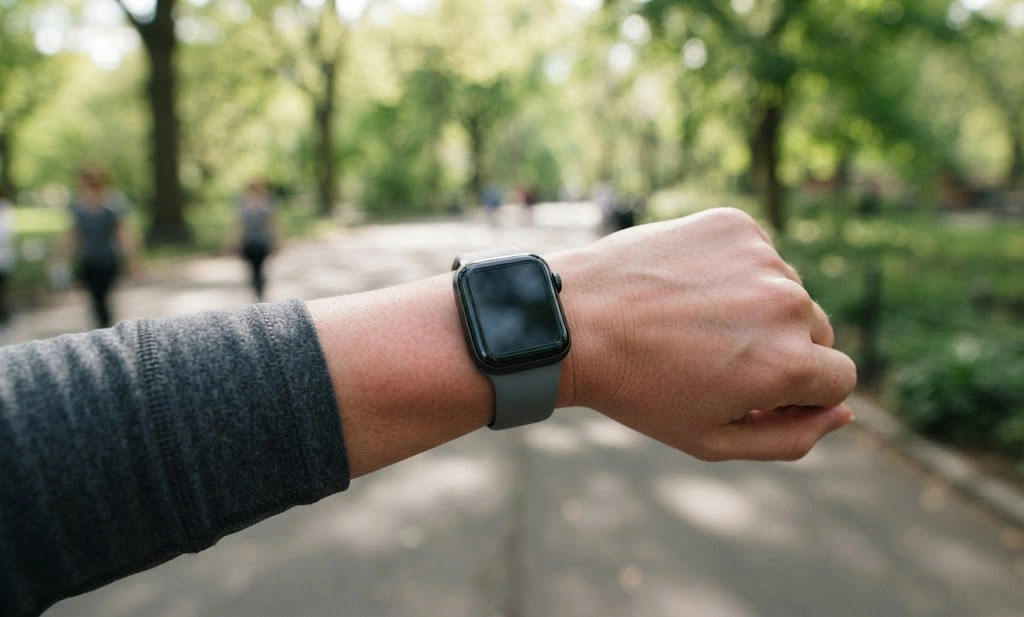
Running, lifting, cycling, and sports all count. Watches give a rough guess, not a lab reading. Exercise is also valuable for your heart, strength, and mood regardless of the calorie figure.
4. Thermic Effect of Food
Digesting food costs energy, and protein costs more than fat. It is a real effect, but it is small. You do not need to build meals around it.
How Many Calories Do I Burn a Day?
People often ask, how many calories do I burn a day, and then compare the answer with their fitness watch. These are not the same thing. If your watch says a walk burned 300 calories, that does not mean your whole day burned 300. Your body was already spending energy before and after the walk.
A calories burned per day calculator like this one adds resting energy, movement, exercise, and digestion into one figure. Think of it as your daily calorie burn calculator. Weekdays and weekends will differ, so look at your typical week. For more detail, read how many calories do I burn a day.
Daily Calorie Calculator: Find Your Calorie Needs
Use this as a daily calorie calculator and daily calorie intake calculator in two steps: find your TDEE, then match it to your goal. To calculate daily calorie needs, ask yourself:
- Do I want to keep my weight, lose fat, or build muscle?
- Has my weight been stable recently?
- Am I getting enough protein, fiber, and variety?
Two people with the same height and weight can still need different amounts. For a longer walkthrough, see our guide on how to calculate daily calorie needs.
Maintenance Calorie Calculator: How to Calculate Maintenance Calories
Your maintenance level is the intake at which your weight stays steady. Use this page as a maintenance calorie calculator or calorie maintenance calculator: your TDEE is the best starting figure. If you are asking how to calculate maintenance calories, how to calculate calories to maintain weight, or how many calories should I eat to maintain weight, follow this method:
- Get your TDEE from the calculator above.
- Eat close to that number for two to three weeks.
- Weigh yourself under similar conditions (same time, same scale) and compare weekly averages.
- If your average weight is steady, you have found your maintenance. If it climbs or drops, adjust by about 100 to 200 calories and test again.
Daily weight can jump from water, salt, and digestion, so ignore single readings. Maintenance also changes after weight loss, weight gain, or a shift in routine. For a worked example, see how to calculate maintenance calories.

How Many Calories Should I Eat Daily?
The honest answer depends on your goal, size, activity, and health. Start with your TDEE and build from there rather than choosing the lowest number an app allows. If you feel constantly hungry, tired, or fixated on food, the target needs another look. Our article on how many calories should I eat daily goes deeper.
TDEE Calculator for Weight Loss
A TDEE calculator for weight loss works because fat loss happens when you eat less than you burn over time. That gap is called a calorie deficit. You can think of this page as a calorie deficit calculator: subtract from your TDEE.
How to Calculate TDEE for Weight Loss
If you want to know how to calculate TDEE for weight loss, follow three steps:
- Calculate your TDEE.
- Choose a moderate deficit. A common guideline is 10-20% below TDEE, or roughly 250-500 calories a day.
- Keep protein high, keep moving, and judge progress over four weeks.
Example (woman): TDEE of 1,953. A 15% deficit is about 290 calories, giving a target near 1,660 calories.
Example (man): TDEE of 2,775. A 500-calorie deficit gives a target near 2,275 calories.
This is the same approach for anyone using TDEE for fat loss. Bigger is not better. Very aggressive cuts make it harder to train, sleep, and keep your muscle, and they are hard to sustain. If you have a history of disordered eating, speak to a professional before setting any calorie target.
Quick Deficit Guide by Pace
Use this table as a starting point. It applies a percentage deficit to the example TDEE values used earlier on this page.
|
Pace |
Deficit |
Woman (TDEE 1,953) |
Man (TDEE 2,775) |
|
Gentle |
10% |
about 1,760 kcal |
about 2,500 kcal |
|
Moderate |
15% |
about 1,660 kcal |
about 2,360 kcal |
|
Faster |
20% |
about 1,560 kcal |
about 2,220 kcal |
Most people do better with the gentle or moderate pace, because it leaves more room for protein, training, and normal life. A deficit steeper than 20% is worth discussing with a qualified professional first.
Protein, Fat, and Carbs on a Deficit
Calories set the amount, and macros shape what that amount is made of. A common starting range is 1.6 to 2.2 g of protein per kg of body weight, about 20 to 35% of calories from fat, and the rest from carbohydrates. Higher protein helps you feel full and protect muscle while you lose fat. Fiber-rich carbs, such as oats, beans, fruit, and vegetables, keep meals filling and training productive.
How Many Calories Should I Eat to Lose Weight?
The answer to how many calories should I eat to lose weight is: your TDEE minus a modest deficit, not a crash-diet number. Our article on how many calories should I eat to lose weight walks through it in detail.
Why Results Differ Between People
The same deficit does not give everyone the same result. As weight falls, your energy needs shift. People also differ in how accurately they log food and how active they stay. Water retention and the menstrual cycle can hide progress for days. Judge your plan after several weeks, not after two days.
TDEE Calculator for Muscle Gain
A TDEE calculator for muscle gain gives you the reference point for a calorie surplus. The usual advice is a small surplus of about 5-10% above TDEE.
Example (man): TDEE of 2,775. A 5-10% surplus gives roughly 2,900 to 3,050 calories.
If you are wondering how many calories should I eat to gain muscle, the surplus is only part of the answer. You also need progressive resistance training, enough protein (many guidelines suggest around 1.6-2.2 g per kg of body weight), sleep, and recovery. Eating far above your needs mostly adds body fat. Beginners can often build muscle near maintenance.
Training Basics for Muscle Gain
A calorie surplus only works when your training gives your body a reason to build tissue. Lift two to four times a week, focus on compound movements such as squats, presses, rows, and deadlift variations, and add small amounts of weight or reps over time. Sleep seven to nine hours when you can, because recovery is when much of the progress happens.
Lean Bulk Weekly Checklist
- Eat roughly 5-10% above your TDEE.
- Hit your protein target on most days.
- Weigh in a few times a week and compare weekly averages.
- Aim for slow gains. A commonly used guideline is about 0.25-0.5% of body weight per week.
- If weight climbs faster than that, trim 100-150 calories. If it stalls for two to three weeks, add 100-150 calories.
- Recheck your TDEE whenever your weight changes by 3-5 kg.
TDEE Calculator for Women and Men
Because the formula contains a sex-based constant, a TDEE calculator for women and men will give different results even with identical height, weight, and age. Women’s formula subtracts 161 while men’s adds 5, a gap of 166 calories at rest.
For women, keep in mind that cycle phase, pregnancy, and breastfeeding can change needs. This calculator is not designed for pregnancy or breastfeeding, so ask a health professional in those cases. For men, the main error is usually overstating the activity level.
Sample TDEE Results for Different Lifestyles
Numbers make this easier to picture. These examples use the same Mifflin-St Jeor formula and activity multipliers described above. Use them to sanity-check your own result from the TDEE calculator, not as targets.
|
Profile |
Age / Height / Weight |
Activity |
Resting energy |
Estimated TDEE |
|
Woman, student |
24 / 160 cm / 60 kg |
Sedentary (1.2) |
about 1,319 |
about 1,583 |
|
Man, office worker |
35 / 175 cm / 90 kg |
Light (1.375) |
about 1,824 |
about 2,508 |
|
Woman, fitness class regular |
40 / 168 cm / 65 kg |
Moderate (1.55) |
about 1,339 |
about 2,076 |
|
Man, athlete |
22 / 178 cm / 75 kg |
Very active (1.725) |
about 1,758 |
about 3,032 |
What These Examples Show
Two things stand out. First, activity changes the result a lot: the athlete’s estimate is nearly double the student’s. Second, a bigger body does not automatically mean a bigger result when activity is low. The office worker weighs 15 kg more than the athlete, yet his estimated TDEE is lower.
How to Use Your Own Result
Find the profile closest to yours and compare. If your calculator result is far above the closest example, double-check your activity level and your units before trusting it.
TDEE vs BMR vs Resting Metabolic Rate
These terms overlap, so here is the difference.
- BMR is measured under strict basal conditions.
- RMR (resting metabolic rate) is measured at rest under slightly looser conditions.
- TDEE is the full day, including movement, exercise, and digestion.
Resting energy is the foundation, and TDEE is what you get after adding your lifestyle. Many online tools label a Mifflin-St Jeor result “BMR” even though it predicts resting energy. It is a common shortcut, so just know what your tool actually calculates.

How Accurate Is a TDEE Calculator?
A calculator predicts; it does not measure. It estimates resting needs from an equation and then guesses activity, and each step adds some error. Lab tests can measure resting energy more directly, but most people do not need that.
If two calculators give you 2,100 and 2,250, neither is necessarily wrong. They may use different formulas or activity definitions. Pick a sensible starting value and test it against your real weight trend. That is the most reliable way to learn how to calculate TDEE accurately: calculate, track, and adjust.
What Else Can Change Your TDEE?
The formula uses only age, height, weight, sex, and activity. Real bodies have more going on, which is why two people with the same inputs can end up with different real-world results.
Age
Energy needs tend to drift down with age, partly because muscle mass often declines. The Mifflin-St Jeor equation reflects this by subtracting 5 calories for each year of age. Strength training and regular walking help offset the trend.
Muscle Mass and Body Composition
Muscle tissue uses more energy at rest than fat tissue, though the difference per kilogram is modest. Two people with the same weight but different body composition can have different resting needs.
Why Weight Alone Is Not Enough
A 90 kg lifter and a 90 kg sedentary person weigh the same but differ in muscle, movement, and food needs. The calculator cannot see this, so your activity choice and your weekly weight trend matter even more.
Sleep and Stress
Poor sleep and high stress rarely change resting energy by a large amount, but they do change appetite, mood, and how much you move. After a rough week, many people snack more and walk less. That shifts the real balance between intake and TDEE without changing the formula at all.
Health Conditions and Medications
Thyroid problems, some medications, and other medical situations can affect energy needs. If your results never match the estimate, or you notice unexplained weight change, speak with a health professional instead of adjusting the calculator.
How to Test Your TDEE Estimate
- Keep your routine steady for 3-4 weeks.
- Log your approximate food intake if tracking suits you.
- Compare weekly average weight, not daily readings.
- If weight is flat, your intake is near maintenance. If it drifts, change your intake by 100-200 calories.
Changing your target every day only creates confusion.
Common Mistakes When Using a TDEE Calculator
- Picking an activity level that is too high. A few gym sessions do not make a week “very active.”
- Trusting smartwatch calories as exact. If your multiplier already includes workouts, adding every watch calorie on top double counts them.
- Ignoring routine changes. A new job, injury, or exam season changes your needs.
- Expecting the scale to act like a calculator. Salt, hydration, and digestion all move it.
- Forgetting nutrition. Two meals with equal calories can differ hugely in protein and fiber.
- Chasing the lowest number. Aggressive targets can hurt energy, recovery, and focus.

Frequently Asked Questions
What is a TDEE calculator?
A TDEE calculator is an online tool that estimates how many calories you burn per day. It combines your age, height, weight, sex, and activity level using a standard formula such as Mifflin-St Jeor.
How do I calculate my TDEE?
First estimate your resting energy using the Mifflin-St Jeor equation. Then multiply it by an activity factor between 1.2 and 1.9. Or enter your details in the calculator above and let it do the maths.
Does TDEE include exercise?
Yes. TDEE includes planned exercise, everyday movement, resting energy, and digestion. If your activity multiplier already reflects your workouts, do not add all your exercise calories again.
Is a TDEE calculator the same as a daily calorie calculator?
They are closely related. A TDEE calculator shows what you burn, while a daily calorie calculator often suggests what to eat for a goal. Many sites combine both, so check whether your result is maintenance or goal-adjusted.
Is my TDEE the number of calories I should eat to maintain weight?
It is a good starting estimate. Real maintenance can differ slightly, so compare your intake with your weight trend over a few weeks.
Can I use a TDEE calculator if I do not exercise?
Yes. Your body burns energy even without workouts. Choose the sedentary or light level that fits your real routine.
How often should I recalculate my TDEE?
Recalculate when your weight, job, or training changes noticeably, or when your results stop matching the estimate. There is no need to do it daily.
Why is my TDEE different on two websites?
Websites may use different formulas, activity multipliers, or rounding. Compare the assumptions instead of choosing the number you like most.
Can I calculate TDEE using my body fat percentage?
Yes, with the Katch-McArdle formula shown above. Its accuracy depends on how accurate your body fat estimate is.
Does eating less always mean faster weight loss?
No. Very low intake is hard to sustain and can hurt training, sleep, and nutrition. A realistic target you can follow usually beats an extreme one.
Can TDEE help with building muscle?
Yes. It tells you your maintenance level so you can plan a small surplus alongside resistance training and enough protein.
What if my weight does not change as predicted?
Give it several weeks, then review your food logging, activity level, sleep, and routine. If something still seems off, a qualified health professional can help.
Is this calculator suitable during pregnancy, breastfeeding, or childhood?
No. Standard adult equations are not designed for these stages. Please get individual guidance from a professional.
Do I need to track calories forever?
No. Many people track for a few weeks to learn portion sizes and then switch to simpler habits. Choose what keeps your relationship with food healthy.
Final Takeaways: Use Your TDEE as a Starting Point
Your daily energy needs come from resting metabolism, everyday movement, exercise, and digestion. This TDEE calculator turns all of that into one practical number you can use for maintenance, fat loss, or muscle gain. Calculate it, test it for a few weeks, and let your real results guide the next adjustment.

Sources and Further Reading
- Mifflin MD, St Jeor ST, et al. “A new predictive equation for resting energy expenditure in healthy individuals.” American Journal of Clinical Nutrition, 1990.
- Katch FI, McArdle WD. Lean body mass based resting energy equation (Katch-McArdle).
- Levine JA. Non-exercise activity thermogenesis (NEAT). Best Practice & Research Clinical Endocrinology & Metabolism, 2002.
- National Institutes of Health and ISSN position stands on energy intake and protein for active adults.
Health note: This content is educational and is not a substitute for individualized medical or nutrition advice. General adult calorie calculations may not suit minors, pregnancy, breastfeeding, eating disorders, or certain medical conditions. A qualified health professional can help with personal needs.