
Macro Calculator
Calculate your daily calories, protein, carbs and fat.
Your Information
Your Macro Breakdown
Enter your details and calculate your daily targets.
Daily Macronutrients

What Is a Macro Calculator?
A macro calculator is an online nutrition tool that estimates your daily calorie needs and helps divide those calories among the three main macronutrients: protein, carbohydrates, and fats. Each macronutrient plays an important role in maintaining energy levels, supporting essential body functions, and helping you achieve your health and fitness goals.
Protein supports muscle growth, tissue repair, and recovery. Carbohydrates provide energy for everyday activities and physical exercise, while dietary fats support hormone production, nutrient absorption, and overall health. Understanding how these nutrients contribute to your daily calorie intake makes meal planning more practical and manageable.
Our macro calculator helps you estimate how many grams of protein, carbohydrates, and fat you may need each day. You can first use our TDEE Calculator to estimate your maintenance calories and then calculate your macronutrient targets based on your nutritional goals.
Instead of guessing portion sizes or following a restrictive diet, you can use your estimated macro targets as a starting point for creating balanced meals. For practical food ideas, explore our Meal Examples to see how calories and macronutrients can fit into everyday meals.
Whether your goal is to lose body fat, maintain your current weight, or build muscle, tracking your macronutrient intake can help you make more informed food choices. However, your ideal macro distribution depends on factors such as body weight, activity level, dietary preferences, and individual nutritional requirements.
By using our free macro calculator, you can better understand your daily macronutrient targets and develop a flexible eating plan that supports long-term healthy habits.
How to Use Our Macro Calculator
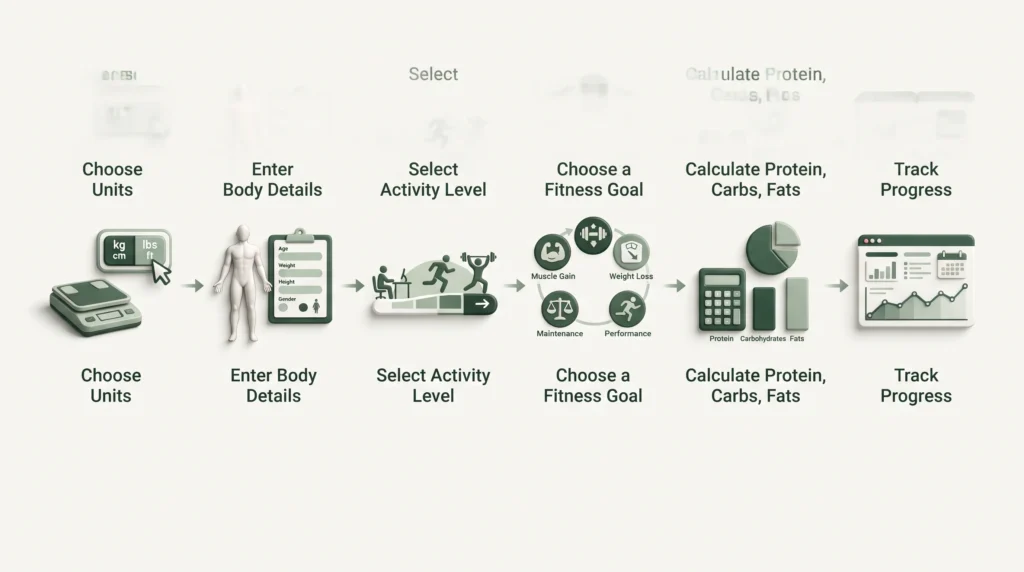
Our macro calculator makes it easy to estimate your daily calorie and macronutrient needs based on your body measurements, activity level, and fitness goals. Follow these six simple steps to calculate your recommended protein, carbohydrate, and fat intake.
- Choose Your Units. Select Metric (kilograms and centimetres) or Imperial (pounds, feet, and inches). Choose the measurement system you are most comfortable using to enter accurate information.
- Enter Your Personal Details. Provide your sex, age, height, and current body weight. These details help the calculator estimate your resting energy expenditure, which is used to determine your daily calorie requirements.
- Select Your Activity Level. Choose an activity level that best reflects your typical weekly routine, including exercise, walking, and everyday movement. Avoid overestimating your activity, as this can produce a higher calorie estimate than you actually need.
- Pick Your Fitness Goal. Select whether you want to lose body fat, maintain your current weight, or build muscle. Your selected goal helps determine the calorie target used to calculate your daily macronutrient requirements.
- Press Calculate. Click the Calculate button to view your estimated daily calorie needs and recommended amounts of protein, carbohydrates, and fats in grams. The calculator also displays a meal split to help you organize your daily food intake.
- Review Your Results and Adjust When Needed. Use your calculated macro targets as a starting point for meal planning. Monitor your energy levels, training performance, and weight trends over several weeks. If your results do not match your goals, review your calorie intake and activity level before making gradual adjustments.
Remember that a macro calculator provides estimates rather than exact nutritional requirements. Your ideal macronutrient intake may vary depending on your body composition, lifestyle, health conditions, and individual dietary needs.
How Your Results Are Calculated?
Step 1: Basal Metabolic Rate (BMR).
This is the energy your body uses at rest. We use the Mifflin-St Jeor equation, which research has found to be among the most reliable predictive formulas for healthy adults.
- Men: BMR = (10 × weight in kg) + (6.25 × height in cm) − (5 × age) + 5
- Women: BMR = (10 × weight in kg) + (6.25 × height in cm) − (5 × age) − 161
Step 2: Total Daily Energy Expenditure (TDEE).
BMR is multiplied by an activity factor to estimate the calories you burn in a day.
|
Activity level |
Description |
Multiplier |
|
Sedentary |
Desk job, little or no exercise |
1.2 |
|
Light |
Exercise 1–3 days a week |
1.375 |
|
Moderate |
Exercise 3–5 days a week |
1.55 |
|
Very active |
Hard exercise 6–7 days a week |
1.725 |
|
Extra active |
Physical job plus daily training |
1.9 |
Step 3: Adjust for your goal.
- Lose fat: about 15–20% below TDEE (a moderate deficit you can sustain)
- Maintain: equal to TDEE
- Gain muscle: about 10–15% above TDEE (a small surplus limits fat gain)
Step 4: Split into macros.
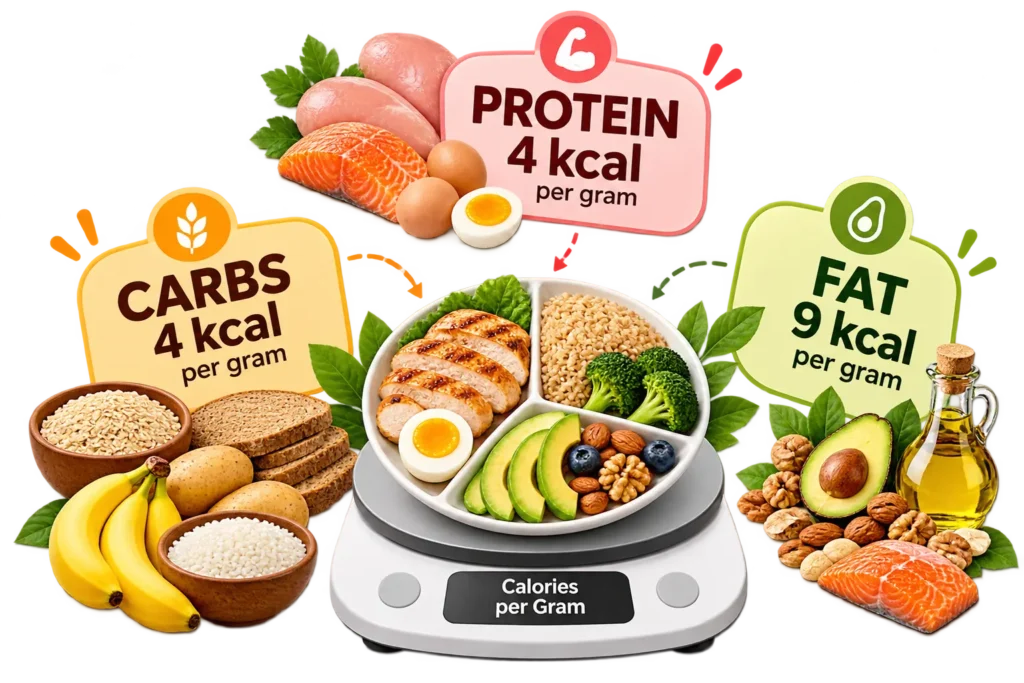
Calories per gram are fixed: protein 4, carbohydrates 4, fat 9. Protein is set first from your body weight, fat second, and the remaining calories go to carbs.
Typical Macro Targets by Goal
|
Goal |
Protein |
Fat |
Carbohydrates |
|
Lose fat |
1.8–2.2 g per kg (0.8–1 g per lb) |
20–30% of calories |
Remaining calories |
|
Maintain |
1.4–1.8 g per kg |
25–35% of calories |
Remaining calories |
|
Gain muscle |
1.6–2.2 g per kg |
20–30% of calories |
Remaining calories |
For reference, the U.S. Dietary Guidelines list acceptable ranges for adults of 10–35% of calories from protein, 45–65% from carbohydrates and 20–35% from fat. Our targets sit inside or close to these ranges, with protein raised for active people.
What Each Macronutrient Does?
Protein repairs and builds muscle, keeps you full and helps preserve lean mass while dieting. Good sources: chicken, fish, eggs, Greek yogurt, lentils, tofu, beans.
Carbohydrates are your body’s preferred fuel for training and brain function. Good sources: rice, oats, potatoes, fruit, whole-grain bread, vegetables.
Fat supports hormones, vitamin absorption and cell health. Good sources: olive oil, nuts, seeds, avocado, fatty fish.
Fiber, Water, and Micronutrients
Our macro calculator helps you estimate your daily protein, carbohydrate, and fat requirements, but balanced nutrition involves more than tracking macronutrients. Fiber, water, vitamins, and minerals also play essential roles in maintaining overall health, supporting digestion, and helping your body function properly.
- Fiber: Supports healthy digestion, gut health, and feelings of fullness. A common guideline is approximately 14 grams of fiber per 1,000 calories consumed. Good sources include vegetables, fruits, lentils, beans, oats, and whole grains. Eating a variety of fiber-rich foods can also help support regular bowel movements.
- Water: Staying hydrated supports digestion, nutrient transportation, body temperature regulation, and physical performance. Drink water regularly throughout the day, especially during exercise or hot weather. Pale-yellow urine can be a useful general indicator of hydration, although individual needs vary.
- Micronutrients: Vitamins and minerals are essential for immune function, bone health, energy metabolism, and normal body processes. Include a variety of vegetables, fruits, dairy products or fortified alternatives, whole grains, and different protein sources in your daily diet. Explore our Meal Examples for balanced meal ideas that combine different food groups.
Remember, a macro calculator provides estimated macronutrient targets, not a complete assessment of nutritional quality. You can also use our Protein Calculator to estimate your daily protein needs. Combining balanced macros with adequate fiber, hydration, and micronutrient-rich foods can help you build a healthier and more sustainable eating routine.
Scientific and Nutrition Reference
Understanding macronutrients is important for planning a balanced diet. Our macro calculator helps you estimate your daily protein, carbohydrate, and fat requirements. These essential nutrients provide energy and perform different functions in the body.
For reliable information about essential nutrients, healthy eating, and dietary requirements, explore the MedlinePlus Nutrition Guide, a health information resource from the U.S. National Library of Medicine.
Macro Tips for Vegetarians
Hitting protein targets is very possible without meat. Combine sources through the day:
- Lentils, chickpeas, beans, and daal
- Eggs, milk, yogurt, and paneer
- Tofu and soy products
- Nuts, seeds, and whole grains
Because plant proteins are often lower in protein per serving, vegetarians may need slightly larger portions or an extra protein-rich snack to reach their target.
When Should You Recalculate Your Macros?
Your calorie and macronutrient needs can change over time depending on your body weight, physical activity, and fitness goals. Regularly reviewing your results with our macro calculator helps you keep your nutrition targets aligned with your current needs.
Consider recalculating your macros when:
- Your weight changes by about 4 to 5 kg: Significant weight changes can affect your daily calorie and macronutrient requirements. Updating your calculations helps you adjust your nutritional targets.
- Your activity level changes noticeably: Starting a new workout routine, increasing exercise intensity, or becoming less active can change your daily energy expenditure. Use our TDEE Calculator to estimate your updated calorie needs.
- Your fitness goal changes: Switching from fat loss to weight maintenance or muscle building may require adjustments to your calorie and macro targets. You can also use our Protein Calculator to review your daily protein requirements.
- You have not reviewed your targets in 4 to 6 weeks: Periodically checking your results can help you identify whether adjustments are needed, especially if your weight, activity, or progress has changed. However, recalculation is not necessary if your circumstances remain stable.
Remember, a macro calculator provides estimates rather than fixed nutritional requirements. Monitor your progress, energy levels, and overall well-being before making significant changes to your daily calorie or macronutrient intake.
How to Read a Nutrition Label
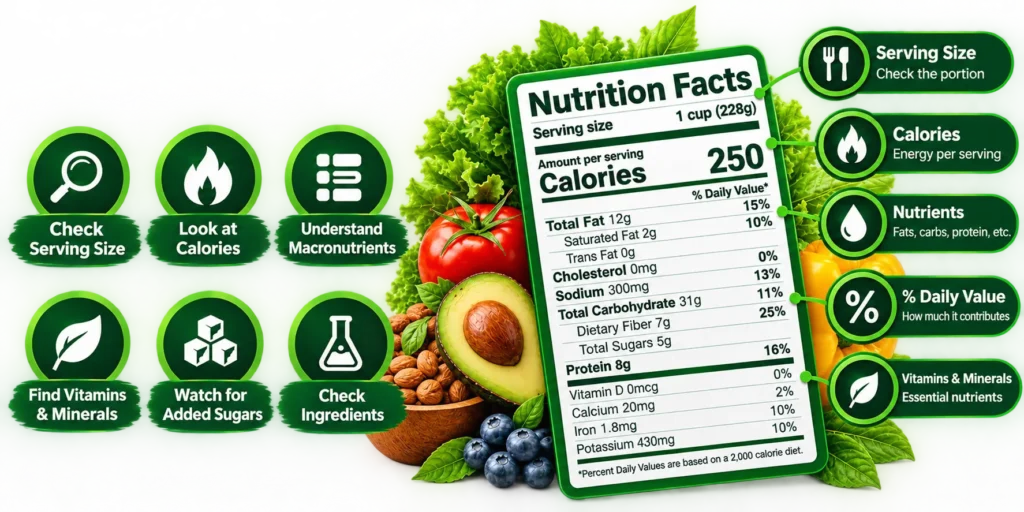
When buying packaged foods, check the following information on the nutrition label to understand what you are eating:
- Serving Size: Nutrition values usually apply to one serving, not the entire package. Some labels also provide values per 100 grams.
- Calories: Check how many calories each serving contains and how many servings are included in the package.
- Protein, Carbohydrates, and Fat: Compare these values with your daily targets from our macro calculator to see how the food fits into your nutrition plan.
- Sugar and Fiber: Foods with more fiber and less added sugar are generally healthier choices, depending on their overall nutritional quality.
Example: If a food label provides nutrition information for a 30 g serving but you eat 60 g, you consume twice the listed calories and macronutrients.
Eating Around Your Workout
How to Read Nutrition Labels for Macro Tracking
When buying packaged foods, understanding nutrition labels can help you make healthier choices and track your daily intake accurately. Use our macro calculator to estimate your nutritional targets, then check the following information on food labels:
- Serving Size: Most nutrition values are listed per serving, not for the entire package. Always check the serving size before using a macro calculator to track your intake. Some labels also provide values per 100 grams.
- Calories: Check how many calories each serving contains and how many servings are included in the package.
- Protein, Carbohydrates, and Fat: Compare these values with your daily macronutrient targets from our macro calculator to understand how the food fits into your nutrition plan.
- Sugar and Fiber: Foods with more fiber and less added sugar are generally better choices, depending on their overall nutritional quality.
Example: If a food label shows nutritional values for a 30 g serving but you eat 60 g, you consume twice the listed calories, protein, carbohydrates, and fat.
Reading nutrition labels carefully helps you track your food intake more accurately and make informed decisions about your daily nutrition.
Common Macro Myths
5 Common Macro Tracking Myths
1: Carbs Make You Fat
Weight gain occurs from a calorie surplus, not from any single nutrient. A macro calculator can help you balance carbohydrates, protein, and fat according to your daily calorie needs.
2: You Must Eat Every 2 to 3 Hours
Total daily intake matters more than meal frequency.
3: More Protein Always Means More Muscle
Training, calories, and sleep are also essential for muscle growth. Beyond a certain point, extra protein provides diminishing benefits.
4: Fat Is Bad for You
Fat is essential for hormone production and vitamin absorption. Just keep an eye on your total calorie intake.
5: You Need Supplements to Hit Your Macros
Most people can meet their nutritional targets through regular food. Supplements are simply a convenient option. Using a macro calculator can help you plan your daily nutrition without relying on supplements.

Eating Out and Desi Dishes
Tracking macros at a restaurant or a family gathering can feel difficult, but using a macro calculator and following these simple tips can make it much easier:
- Choose protein first: Go for grilled or tikka items, daal, chana, or yogurt.
- Watch the oil in gravies: Dishes like karahi, nihari, and haleem are higher in fat, so keep an eye on your portion size.
- Mind your rice and naan: Half a plate of rice or one roti is often enough.
- Avoid sugary drinks: Liquid calories add up quickly.
- Keep your next meal normal: One meal out will not ruin your whole plan.

Tracking Without an App
How to Manage Your Macros Without Tracking Apps
You do not always need a food tracking app to maintain balanced eating habits. While our macro calculator helps estimate your daily protein, carbohydrate, and fat requirements, simple portion-control methods can make nutrition planning easier without counting every calorie.
If you prefer not to track your food digitally, follow these practical habits:
- Protein: Include one palm-sized portion of protein in each main meal. Good options include chicken, fish, eggs, lentils, beans, and tofu. Protein supports muscle maintenance, recovery, and fullness.
- Vegetables: Aim to fill about half your plate with vegetables. They provide fiber, vitamins, and minerals while helping you create satisfying, nutrient-rich meals.
- Carbohydrates: Start with a fist-sized portion of carbohydrate-rich foods such as rice, potatoes, or whole grains. Use our macro calculator to adjust portions according to your activity level and energy needs.
- Oil and Ghee: Measure cooking oils, butter, and ghee with a spoon instead of pouring freely. These foods are calorie-dense, so even small portions can significantly increase your daily calorie intake.
- Weekly Progress Check: Monitor your average body weight each week instead of focusing on daily fluctuations. Review your portion sizes, energy levels, and progress before making adjustments.
These simple habits can help you maintain a balanced eating routine without tracking every gram of food. However, portion sizes are only rough estimates and may not match your exact nutritional requirements.
For more personalized targets, use our macro calculator to estimate your daily macronutrient needs and adjust your eating habits based on your individual goals.
Tips for Hitting Your Macros
Using a macro calculator is a good starting point for planning your daily nutrition. However, reaching your fitness goals also requires consistency, balanced meals, and healthy eating habits.
Follow these simple tips to manage your macros more easily.
1. Eat Protein at Every Meal
Include protein-rich foods such as eggs, chicken, fish, lentils, or yogurt in your meals.
Try spreading your protein intake across 3–4 meals to support muscle recovery and keep you feeling full.
2. Use a Free Food Tracking App
A tracking app helps you record your daily calories, protein, carbohydrates, and fats.
Log your meals regularly to understand your eating habits. Focus on consistency rather than perfect results.
3. Measure Your Food Portions
Use a kitchen scale for the first two weeks to understand serving sizes.
This can help you estimate portions more accurately, even when you stop weighing your food.
4. Stay Close to Your Macro Targets
You do not need to hit your targets exactly every day.
Aim to stay within 5–10% of your calculated macros when practical. Small differences are normal.
5. Review Your Progress Every 4–6 Weeks
Check your body weight, activity level, and fitness progress.
If your needs change, use our macro calculator to update your daily calorie and macronutrient targets.
6. Avoid Extremely Low-Calorie Diets
Eating too few calories can cause fatigue, muscle loss, and nutritional deficiencies.
Choose a balanced eating plan that supports your energy needs. Seek professional advice before following a highly restrictive diet.
Remember: Successful macro tracking is about building healthy habits, not achieving perfect numbers every day. Small, consistent improvements can make your nutrition plan easier to maintain.
Frequently Asked Questions
Disclaimer
Your real calorie and macro needs depend on your health, body and lifestyle. Please talk to a doctor or registered dietitian before changing your diet, especially if you have a health condition, are pregnant or breastfeeding, or are under 18.