Protein Calculator
Protein Calculator
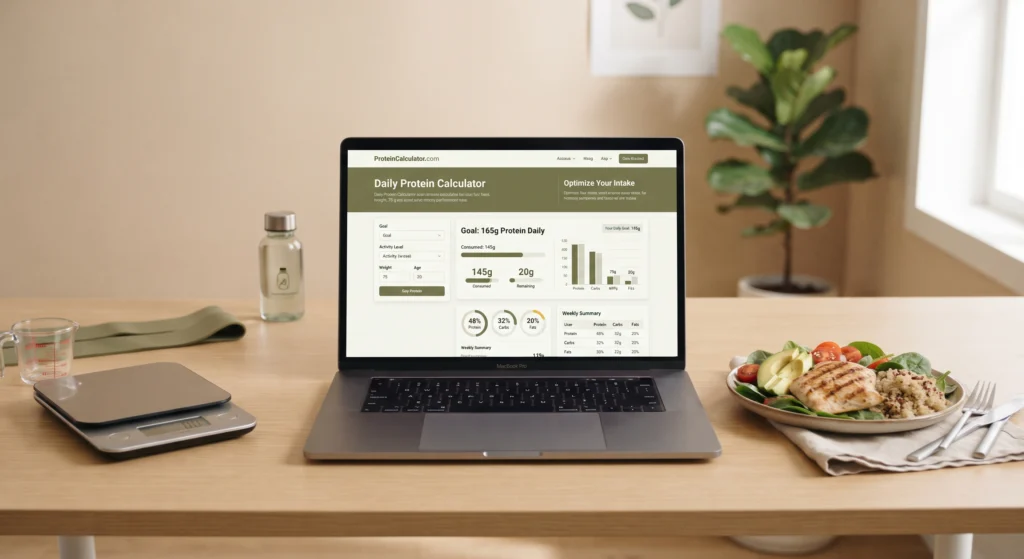
Calculate your daily protein requirements based on your body weight and fitness goal.
Your Daily Protein Needs
Enter your details and click Calculate Protein.
This is an estimated daily protein target. Your actual needs may vary depending on your health, activity level and individual requirements.
What Is a Protein Calculator?
A protein calculator is a free online nutrition tool that helps estimate how much protein you may need each day based on your body weight, activity level, and fitness goals. Whether you want to build muscle, lose body fat, improve exercise recovery, or maintain general health, understanding your daily protein requirements can make meal planning easier and more practical.
Protein is an essential macronutrient made up of amino acids, which your body uses to build and repair tissues, maintain muscle, produce enzymes and hormones, and support normal immune function. Unlike some nutrients that the body can manufacture, essential amino acids must come from the foods you eat.
Your ideal protein intake is not necessarily the same as someone else’s. A person who spends most of the day sitting may have different nutritional requirements from someone who lifts weights, runs regularly, or performs physically demanding work. Age, overall food intake, body composition, and certain health conditions can also affect individual needs. These differences are important when interpreting protein calculator results.
Our protein calculator provides an estimated daily protein target in grams and shows how that amount can be divided across meals. Instead of following a generic high-protein diet, you can use the result as a starting point for planning meals around your lifestyle.
Your ideal protein intake is not necessarily the same as someone else’s. A person who spends most of the day sitting may have different nutritional requirements from someone who lifts weights, runs regularly, or performs physically demanding work. Age, overall food intake, body composition, and certain health conditions can also affect individual needs.
Our protein calculator provides an estimated daily protein target in grams and shows how that amount can be divided across meals. Instead of following a generic high-protein diet, you can use the result as a starting point for planning meals around your lifestyle.
The most useful protein target is one that supports your nutritional needs without making your diet unnecessarily restrictive or difficult to maintain.
Calculator results are general estimates, not medical prescriptions. If you have kidney disease, another significant medical condition, or specialized nutritional needs, seek individualized advice from a qualified healthcare professional or registered dietitian.

How to Use This Protein Calculator
Using our free protein calculator takes only a few steps. Enter your information, select the options that best describe your circumstances, and review your estimated daily intake.
- Choose your measurement units. Select Metric (kg) or Imperial (lb) in the protein calculator.
- Set your body weight. Adjust the slider to match your current weight as accurately as possible.
- Select your fitness goal. Choose Lose fat, Build muscle, General health, Endurance, or Age 65 or older.
- Choose your training level. Select Light, Regular, or Intense based on your usual exercise routine.
- Select meals per day. Choose 3, 4, or 5 meals according to your eating schedule.
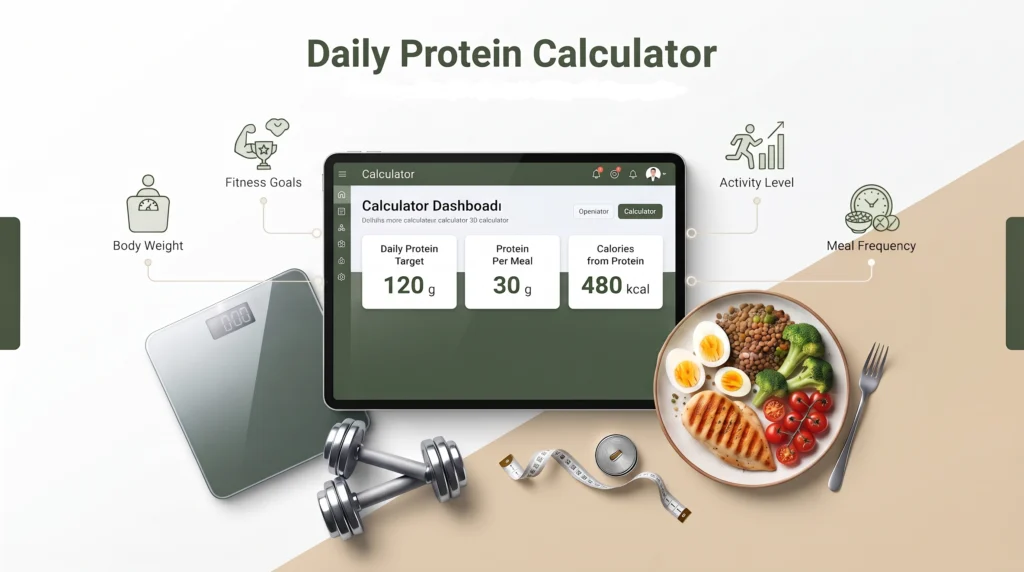
- Press Calculate protein. Review your estimated daily protein intake, protein per meal, and calories supplied by protein.
The calculator also includes a food example to help you visualize an approximate protein serving.
Tip: Select a training level that reflects your regular activity rather than your most demanding workout. An unusually active day does not necessarily represent your normal protein requirements.
Understanding Your Protein Calculator Results
Your results can be used in three practical ways:
- Daily protein target: The estimated total grams of protein per day shown by your protein calculator.
- Protein per meal: An approximate amount per meal based on the number of meals you selected.
- Calories from protein: The energy provided by your estimated protein intake.
Protein provides approximately 4 calories per gram. For example, a daily target of 100 g of protein supplies around 400 calories from protein alone. Your body also needs energy from carbohydrates and dietary fats.
If you want to understand how protein fits into your total calorie intake, use our TDEE Calculator to estimate maintenance calories and our Macro Calculator to explore your daily protein, carbohydrate, and fat targets.
How Your Daily Protein Requirements Are Calculated
Our protein calculator estimates protein requirements using body weight and a protein factor expressed in grams per kilogram of body weight (g/kg).
The basic formula is:
Daily Protein (g) = Body Weight (kg) × Protein Factor (g/kg)
The protein factor changes according to the fitness goal and training intensity you select.
For example, a person who weighs 70 kg and uses a factor of 1.6 g/kg would receive an estimated target of:
70 × 1.6 = 112 g of protein per day
This formula is useful because protein requirements often relate to body size and physical demands. However, it is still a general estimate and cannot account for every individual difference in health, body composition, or metabolism.
Protein Factors Used by Our Calculator
The following table shows the preset protein factors used by this tool.
|
Goal |
Light Training |
Regular Training |
Intense Training |
|---|---|---|---|
|
Lose fat |
1.6 g/kg |
1.9 g/kg |
2.2 g/kg |
|
Build muscle |
1.6 g/kg |
1.8 g/kg |
2.0 g/kg |
|
General health |
0.8 g/kg |
1.0 g/kg |
1.2 g/kg |
|
Endurance |
1.2 g/kg |
1.4 g/kg |
1.6 g/kg |
|
Age 65 or older |
1.0 g/kg |
1.2 g/kg |
1.5 g/kg |
Important: These are the calculator’s preset estimation factors, not universal medical recommendations. Some settings, particularly higher protein levels during fat loss and the 1.5 g/kg option for older adults, may not be necessary or appropriate for everyone.
For adults aged 65 and older, expert guidance generally recommends at least approximately 1.0–1.2 g/kg for healthy individuals. Higher amounts may be appropriate in certain situations, but existing illnesses, kidney function, and nutritional status should be considered.
How to Calculate Protein Using Pounds
If your weight is measured in pounds, convert it to kilograms before applying the formula:
Weight in kg = Weight in lb ÷ 2.205
For example, a person weighing 165 lb has an approximate body weight of:
165 ÷ 2.205 = 74.8 kg
If the selected protein factor is 1.4 g/kg:
74.8 × 1.4 = 104.7 g per day
The estimated daily target would be approximately 105 g of protein.
Our protein calculator performs this conversion automatically when you select Imperial units.
Worked Example: Protein for Muscle Building
Consider an adult who:
- Weighs 65 kg
- Selects Build muscle
- Chooses Regular training
- Plans to eat 3 or 4 meals per day
The applicable calculator factor is 1.8 g/kg.
Daily protein = 65 × 1.8 = 117 g
If divided evenly:
- 3 meals: approximately 39 g per meal
- 4 meals: approximately 29 g per meal
- 5 meals: approximately 23 g per meal
At 4 calories per gram, 117 g of protein provides approximately 468 calories.
These are protein calories, not the person’s complete daily calorie needs.
This example shows how a protein calculator converts your chosen settings into a practical daily target. You can distribute that target according to your appetite, meal preferences, and training schedule.

How Much Protein Do You Need Per Day?
Daily protein requirements depend on body size, physical activity, health, and nutritional goals. There is no single intake that is ideal for every adult.
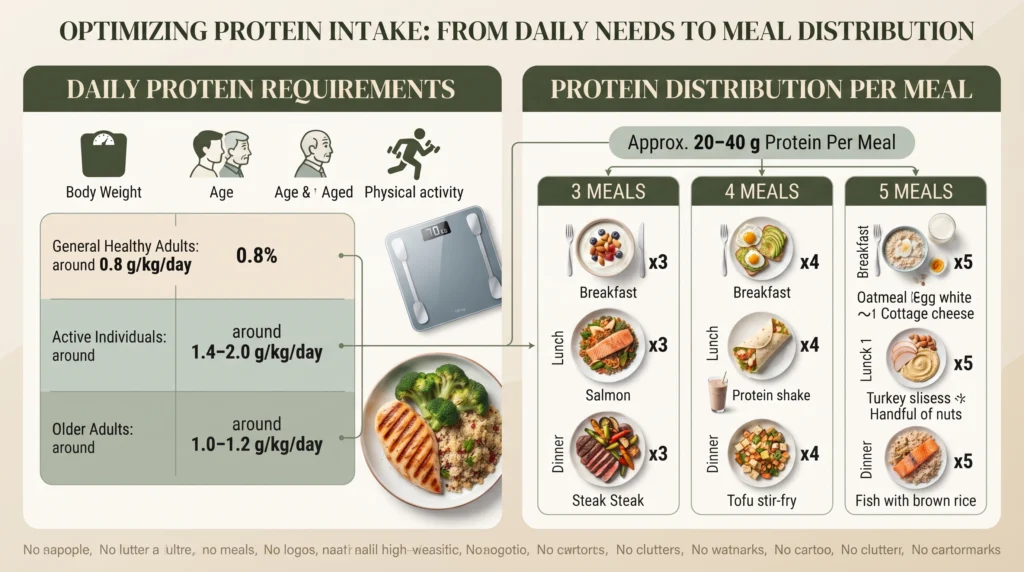
The Recommended Dietary Allowance (RDA) for most healthy adults is approximately 0.8 g of protein per kilogram of body weight per day. This is a general dietary reference intended to meet the needs of nearly all healthy adults in the population, rather than an optimal target for every athlete or fitness goal.
People who exercise regularly may benefit from higher protein intakes, particularly when strength training or recovering from demanding exercise.
Research in sports nutrition commonly supports approximately 1.4–2.0 g/kg/day for many healthy, exercising individuals. Requirements can differ with exercise intensity, total calorie intake, training experience, and individual circumstances.
For older adults, nutrition experts often recommend at least 1.0–1.2 g/kg/day to support muscle function, together with appropriate physical activity.
Daily Protein Intake by Body Weight
The table below illustrates how daily protein totals change at different intake factors, helping you compare your protein calculator estimate with common body-weight examples.
|
Body Weight |
0.8 g/kg |
1.2 g/kg |
1.6 g/kg |
2.0 g/kg |
|---|---|---|---|---|
|
50 kg |
40 g |
60 g |
80 g |
100 g |
|
60 kg |
48 g |
72 g |
96 g |
120 g |
|
70 kg |
56 g |
84 g |
112 g |
140 g |
|
80 kg |
64 g |
96 g |
128 g |
160 g |
|
90 kg |
72 g |
108 g |
144 g |
180 g |
|
100 kg |
80 g |
120 g |
160 g |
200 g |
These examples are mathematical comparisons, not personalized prescriptions.
Someone with a very high body weight, a medical condition, or an unusual body composition may need a different approach to determining an appropriate protein target.
Why Protein Needs Vary Between Individuals
Several factors influence how much protein may be useful:
- Body weight: Larger bodies often have higher total protein requirements, although body composition also matters.
- Exercise intensity: Frequent resistance training or demanding endurance exercise may increase protein needs.
- Age: Muscle maintenance becomes increasingly important with advancing age, and some older adults benefit from higher intake than the standard adult RDA.
- Calorie intake: During an energy deficit, sufficient protein can help support the maintenance of lean tissue.
- Dietary choices: Different foods provide different amounts and combinations of amino acids.
- Health conditions: Kidney disease, certain illnesses, recovery from injury, pregnancy, and other circumstances may require individualized nutrition planning.
A protein calculator can simplify the initial estimate, but it cannot fully replace professional assessment when these factors require special consideration.
How Much Protein Should You Eat Per Meal?
Your protein calculator results can help you distribute your estimated daily protein intake across meals according to your eating schedule and nutritional goals.
Spreading protein-containing foods across breakfast, lunch, dinner, and optional snacks can make it easier to reach your daily requirements. For physically active adults, this pattern may also support muscle protein synthesis when combined with appropriate exercise.
Sports nutrition guidance commonly discusses servings of approximately 20–40 g of high-quality protein, although appropriate amounts vary with body size, age, total intake, and training demands.
These values should not be treated as strict maximums. Your body does not automatically waste all protein consumed beyond 40 g in a meal.
Protein Distribution Across 3, 4, or 5 Meals
|
Meals Per Day |
Practical Approach |
|---|---|
|
3 meals |
Suitable for people who prefer larger meals |
|
4 meals |
Allows a smaller protein portion at each eating occasion |
|
5 meals |
May suit people with higher daily targets or smaller appetites |
For someone aiming for 120 g daily:
- Three meals could provide approximately 40 g each.
- Four meals could provide approximately 30 g each.
- Five meals could provide approximately 24 g each.
Your meals do not need to contain identical amounts. A schedule that fits your routine and helps you meet your nutritional needs is generally more sustainable than rigidly following exact numbers.
Protein Content of Common Foods
Understanding how much protein is found in everyday foods can make it easier to turn your protein calculator target into practical meals.
The table below includes animal-based and plant-based options commonly used in home cooking, including foods familiar to South Asian households.
|
Food |
Serving Size |
Approximate Protein |
|---|---|---|
|
Chicken breast, cooked |
100 g |
31 g |
|
Salmon or similar fish, cooked |
100 g |
22–25 g |
|
Egg |
1 large |
6 g |
|
Paneer |
100 g |
14–20 g |
|
Greek yogurt, plain |
170 g |
15–18 g |
|
Dahi (plain yogurt) |
1 cup |
8–10 g |
|
Milk |
1 cup (240 ml) |
8 g |
|
Lentils (daal), cooked |
1 cup |
18 g |
|
Chickpeas (chana), cooked |
1 cup |
14–15 g |
|
Firm tofu |
100 g |
8–15 g |
|
Peanuts |
30 g |
7–8 g |
|
Almonds |
30 g |
6 g |
Note: Protein amounts vary depending on the food variety, brand, recipe, water content, and cooking method. Check nutrition labels when more precise tracking is needed.
How to Use This Food Table
Start with your estimated daily protein target, then identify the foods and portions you regularly eat.
For example, two large eggs may provide approximately 12 g of protein, while a cup of milk adds around 8 g. Together, they provide roughly 20 g before counting any additional protein in bread or other foods.
You can then plan lunch and dinner around protein-rich options such as chicken, daal, fish, tofu, or yogurt.
Use the protein calculator to estimate your daily target and compare it with your typical food intake rather than attempting to follow an unfamiliar meal plan immediately.
Best Protein Sources for a Balanced Diet
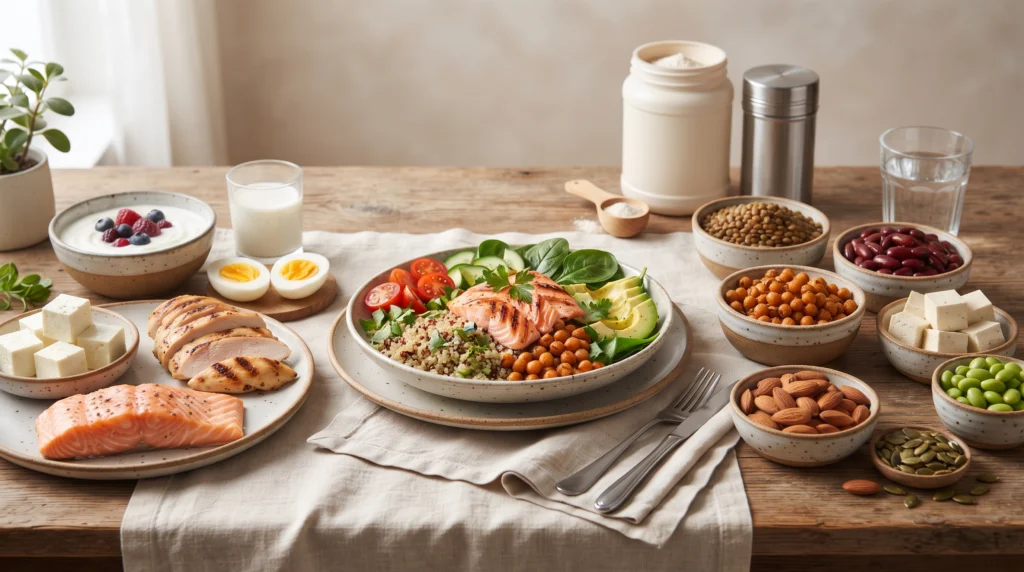
Choosing the right protein sources involves more than looking at grams alone. Foods also provide vitamins, minerals, healthy fats, fiber, and other nutrients that contribute to overall health.
Animal-Based Protein Sources
Chicken, fish, eggs, milk, yogurt, paneer, and lean meat are generally considered complete protein sources because they contain all nine essential amino acids.
These foods can be convenient options for meeting daily protein requirements. Many also supply nutrients such as vitamin B12, calcium, iron, zinc, or omega-3 fatty acids, depending on the food.
For a balanced eating pattern, consider lean poultry, fish, eggs, and appropriate portions of dairy products. Limit frequent reliance on highly processed meats.
Plant-Based Protein Sources
Lentils, chickpeas, beans, soybeans, tofu, tempeh, seitan, nuts, and seeds provide protein alongside a variety of other nutrients.
Plant-based meals can support adequate protein intake when the total quantity and variety of foods are appropriate.
For example, daal served with rice or roti provides complementary amino acids as part of a familiar, affordable meal. You do not need to combine specific plant proteins at every meal; eating a varied diet throughout the day is generally sufficient.
Soy foods, including tofu and tempeh, are particularly useful plant-based protein options.
People following vegan or vegetarian diets can use a protein calculator to estimate their daily target, then choose portions of legumes, soy products, grains, nuts, and seeds that help meet it.
Are Protein Powders Necessary?
Protein powders are supplements, not essential components of a healthy diet.
Whey, casein, soy, pea, and other protein blends may provide a convenient source of protein when meals alone do not meet nutritional needs.
However, a protein shake cannot replace the full nutritional value of a balanced meal containing vegetables, whole grains, healthy fats, and other nutrient-rich foods.
If you use a protein supplement, check the label for serving size, protein quantity, added sugars, and other ingredients. People with allergies or medical conditions should also consider the product’s suitability.
Protein Requirements for Different Fitness Goals
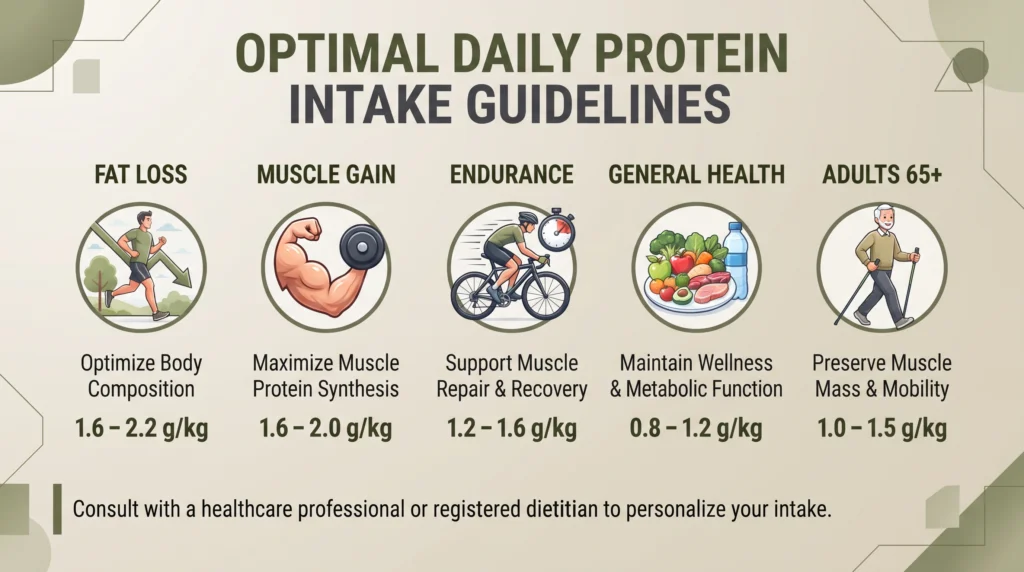
Your fitness goal can influence which protein intake range is most useful. However, protein is only one part of nutrition and should be considered alongside total calorie intake, exercise, sleep, and overall dietary quality.
Protein for Fat Loss
When you consume fewer calories than your body uses, weight loss can include both fat and lean tissue.
Adequate protein, combined with resistance training when appropriate, can help support muscle retention during a calorie deficit. Protein-rich meals may also improve fullness for some people, making it easier to maintain a balanced eating plan.
The protein calculator uses factors of 1.6–2.2 g/kg for its fat-loss settings, depending on selected training intensity. These are relatively high-protein options and may not be necessary for every person trying to lose weight.
Your overall calorie deficit, nutritional needs, and body composition should guide the final target.
To understand how many calories your body may need, begin with our TDEE Calculator. You can then use the Macro Calculator to plan a suitable balance of protein, carbohydrates, and fats.
Protein for Muscle Gain
Building muscle requires a consistent training stimulus, adequate energy intake, and sufficient dietary protein.
Research indicates that many healthy adults who perform resistance training can make progress with protein intakes around 1.4–2.0 g/kg/day. Higher amounts are not automatically better, and the most appropriate intake depends on the individual.
The protein calculator’s muscle-building settings range from 1.6–2.0 g/kg.
For example, an 80 kg adult using a factor of 1.8 g/kg would receive an estimated target of:
80 × 1.8 = 144 g of protein per day
Distributing that protein across regular meals may make the target easier to achieve.
Remember that increasing protein without a suitable strength-training program is unlikely to produce substantial muscle growth on its own.
Protein for Endurance Training
Running, cycling, swimming, and other endurance activities place repeated physical demands on working muscles.
Protein contributes to the repair and adaptation of these tissues, while carbohydrates remain important for replenishing energy stores and supporting endurance performance.
Our protein calculator uses approximately 1.2–1.6 g/kg for endurance settings.
After longer or demanding sessions, a meal containing both protein and carbohydrates can help support recovery. Practical examples include yogurt with fruit, chicken with rice, or daal with roti.
Fluid intake and sufficient overall calories are also important components of an endurance nutrition plan.
Protein for General Health
Not everyone needs a high-protein diet.
For many healthy, relatively inactive adults, the recommended protein intake of approximately 0.8 g/kg/day provides a useful general reference. Our protein calculator uses 0.8–1.2 g/kg for general health, depending on your selected activity level and nutritional needs.
A balanced diet with appropriate protein, carbohydrates, fats, fiber, vitamins, and minerals is more valuable than focusing on one nutrient alone.
If you are also interested in general weight screening, our BMI Calculator can provide an estimated Body Mass Index. BMI is a screening tool and does not directly measure body fat or determine overall health.
Protein for Adults Aged 65 and Older
Muscle mass and strength can decline with age, increasing the importance of adequate nutrition and appropriate physical activity.
Older adults may benefit from higher protein intake than the standard adult RDA. Our protein calculator estimates daily needs, while experts commonly recommend 1.0–1.2 g/kg/day for healthy older adults. Those with illness or additional nutritional needs may require more.
Our calculator includes an Age 65 or older category with preset factors of 1.0, 1.2, and 1.5 g/kg.
The highest setting should not be interpreted as a routine recommendation for every older adult. Kidney function, overall medical history, nutritional status, and exercise tolerance must be considered.
Where appropriate, combining adequate protein intake with resistance exercise can help maintain muscle function and independence.
Protein and Calories: How Do They Work Together?
Protein intake matters, but your total energy balance also influences body weight and physical performance.
Each gram of protein provides approximately 4 calories.
Carbohydrates also provide approximately 4 calories per gram, while fat provides approximately 9 calories per gram.
Suppose your daily protein target from our protein calculator is 120 g:
120 × 4 = 480 calories from protein
If your estimated daily energy requirement is 2,000 calories, those 480 calories would represent approximately 24% of that intake.
The remaining calories would come from carbohydrates and fats.
A protein calculator estimates protein grams; it does not determine a complete personalized meal plan or diagnose nutritional deficiencies.
For a broader picture, use our Macro Calculator, which considers calorie intake and the distribution of major macronutrients.
Is Too Much Protein Harmful?
Protein is essential for normal body function, but consuming more than you need does not automatically improve muscle growth, recovery, or overall health.
For many healthy adults, a moderately high-protein diet can support muscle maintenance, exercise recovery, and overall nutrition when combined with balanced eating habits. However, protein requirements vary depending on individual health, food choices, physical activity, and total calorie intake. Our protein calculator helps estimate an appropriate daily protein target based on your body weight and fitness goals.
There is no single protein limit that is appropriate for every person.
Potential Concerns With Excessive Protein Intake
- Digestive discomfort: A diet that replaces fiber-rich foods with large amounts of protein-heavy foods may contribute to constipation or digestive discomfort. Eating vegetables, fruits, legumes, and whole grains can help maintain dietary fiber intake.
- Kidney health: A protein calculator provides general estimates, but people with chronic kidney disease may need individualized protein targets. Those not receiving dialysis may require protein restriction, while dialysis patients often have different requirements. Higher protein intake does not automatically cause kidney damage in otherwise healthy adults. However, people with impaired kidney function should follow professional medical advice when determining their daily protein needs.
- Excess calorie consumption: Protein contributes calories just like other macronutrients. Adding large protein shakes or extra meals without adjusting overall intake may increase total calories and contribute to weight gain over time.
- Nutritional imbalance: Focusing too heavily on protein can reduce the variety of foods in your diet, potentially leaving less room for healthy fats, carbohydrates, fiber, vitamins, and minerals.
- Protein source quality: Some processed meats, snack bars, and protein supplements contain substantial amounts of sodium, saturated fat, or added sugars. Food quality matters as well as protein quantity.
The protein calculator should be used as a planning reference rather than encouragement to consume the highest possible amount.
Who Should Seek Medical Advice Before Increasing Protein?
Before using a protein calculator to make major dietary changes, consult a qualified healthcare professional or registered dietitian if you:
- Have chronic kidney disease or reduced kidney function.
- Have significant liver disease or another serious medical condition.
- Are pregnant or breastfeeding.
- Are under 18 years old.
- Are recovering from major illness or surgery.
- Have a history of disordered eating or require therapeutic nutrition.
Individual medical needs can affect both the amount and type of protein your body requires. For general nutrition planning, our Macro Calculator can help you understand protein, carbohydrate, and fat distribution, but it does not account for medical conditions or replace professional advice.
For more information, read our Medical Disclaimer.

Practical Tips to Reach Your Daily Protein Target
Reaching your protein calculator target does not have to mean expensive supplements, complicated recipes, or weighing every ingredient indefinitely.
Include Protein at Breakfast
Breakfast can contribute a meaningful amount toward your daily intake.
Examples include eggs with milk, yogurt with oats, or tofu with whole-grain toast. Starting with a protein-containing meal can make the remaining daily target easier to manage.
Build Meals Around Familiar Foods
Choose a main protein source, then add vegetables, whole grains, and other foods that suit your calorie needs.
For example, a balanced lunch might include chicken or daal, rice or roti, and vegetables. Your portion sizes can vary according to appetite, activity, and nutritional goals.
Keep Simple Protein-Rich Snacks Available
Boiled eggs, plain yogurt, roasted chana, milk, and nuts are convenient options. They can help increase protein intake without requiring a separate cooked meal.
Include More Than One Protein Source
Combining foods can be useful when a single serving does not provide much protein.
For instance, a daal meal can include yogurt on the side, while a breakfast of oats can include milk or a suitable soy alternative.
Plan Around Your Routine
A practical protein target should fit your work, study, exercise, and family schedule.
Eating three balanced meals may be easier for one person, while another may prefer four smaller eating occasions.
Monitor Your Intake Without Becoming Overly Rigid
Tracking food intake for a short period can help you understand usual serving sizes and protein content.
However, daily intake does not need to match a calculated number exactly. Consistency, dietary variety, and overall nutrition are more important than treating a single estimate as a strict rule.
Review Your Protein Needs When Circumstances Change
Your target may change when your body weight, activity level, training routine, or fitness goals change.
Revisit the protein calculator when these changes are meaningful, and seek professional guidance if medical or nutritional circumstances require individualized adjustments.
Example: A Balanced Protein-Rich Day
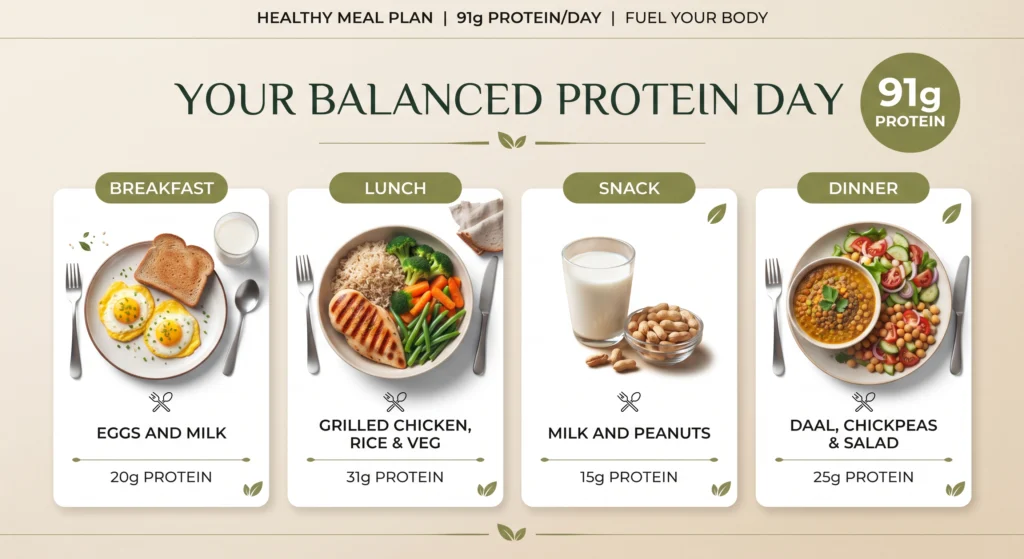
The following example shows how common foods can contribute toward your daily protein target from our protein calculator without relying on supplements.
|
Meal |
Example Foods |
Approximate Protein |
|---|---|---|
|
Breakfast |
2 eggs and 1 cup milk |
20 g |
|
Lunch |
100 g cooked chicken breast with rice and vegetables |
31 g |
|
Snack |
1 cup milk and 30 g peanuts |
15 g |
|
Dinner |
1 cup cooked daal and ½ cup cooked chickpeas with salad |
25 g |
|
Estimated total |
91 g |
This example illustrates a daily target from our protein calculator, not a complete personalized nutrition plan. Actual amounts vary by portion size and preparation method. It also excludes additional protein from rice, bread, vegetables, and other ingredients.
The example does not specify an appropriate total calorie intake. Meals should provide enough energy and essential nutrients to meet individual needs.
For more complete meal ideas, visit our Meal Examples page, where you can explore different daily calorie plans and common South Asian foods.
Common Mistakes When Calculating Protein Intake
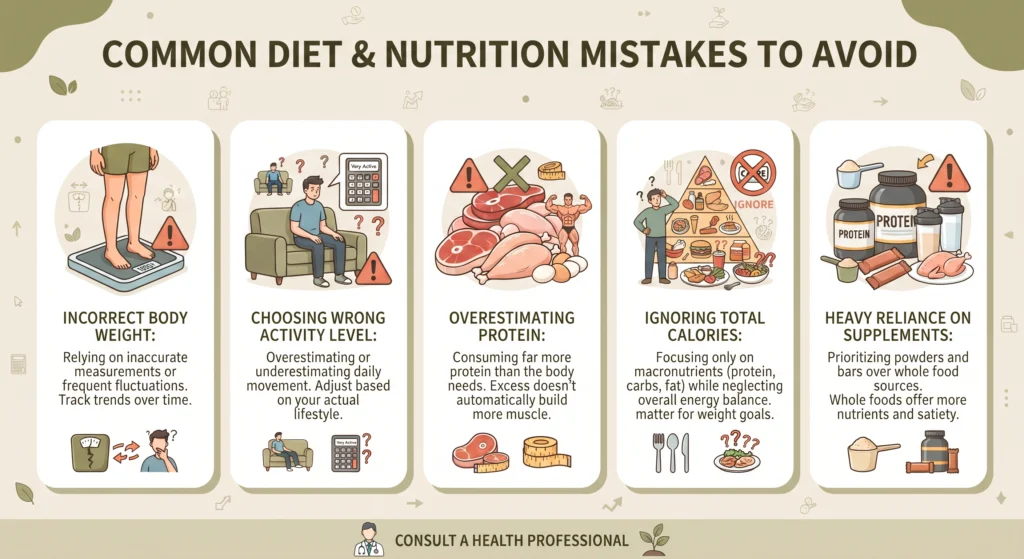
Remember that a protein calculator provides a general estimate, so your results should be considered alongside your overall diet, activity level, and individual health needs.
Choosing an Unrealistically High Activity Level
Selecting Intense training when your normal routine is light may give a higher result than you need.
Choose the setting that best matches your typical week.
Confusing Protein Grams With Food Weight
A 100 g portion of chicken does not contain 100 g of protein. Depending on its preparation, 100 g of cooked chicken breast provides roughly 31 g of protein.
Check whether a table refers to food weight or actual protein content.
Ignoring Total Daily Calories
Protein is important, but increasing protein without considering calories can affect weight-management goals.
Use a calorie estimate alongside your protein target when planning weight loss or muscle gain.
Relying Too Heavily on Supplements
Protein powder can be convenient, but it does not provide every nutrient found in a varied diet.
Whole foods remain important for vitamins, minerals, fiber, and overall dietary quality.
Expecting a Calculator to Provide an Exact Medical Requirement
A protein calculator provides an estimated daily protein requirement based on general body-weight factors, but these calculations have certain limitations.
Very muscular individuals, adults with significant obesity, older adults with medical conditions, and people following therapeutic diets may have different protein needs. For these individuals, protein calculator results should be used as a general reference rather than a personalized recommendation. Consulting a qualified healthcare professional or registered dietitian can help determine an appropriate daily protein intake.
Protein Calculator vs. TDEE Calculator vs. Macro Calculator
Although a protein calculator and other nutrition tools are related, each serves a different purpose.
|
Calculator |
Main Purpose |
What It Helps You Understand |
|---|---|---|
|
Protein Calculator |
Estimates daily protein intake |
Approximate grams of protein per day and per meal |
|
Estimates daily energy expenditure |
Approximate calories needed for weight maintenance |
|
|
Estimates macronutrient distribution |
Approximate protein, carbohydrate, and fat targets |
|
|
Estimates Body Mass Index |
A general weight-status screening category |
For example, someone planning a muscle-building diet might begin by estimating maintenance calories, determine a suitable energy intake, and then use a protein calculator to estimate a protein target that fits the plan.
These tools complement one another, but their results remain estimates rather than personalized medical advice.
Frequently Asked Questions
Make Your Protein Target Practical
Understanding your daily protein needs can help you make more informed food choices, but nutrition does not need to become complicated.
Start with an appropriate estimate, include a variety of nutritious protein sources, and build meals that fit your appetite, activity level, and health goals.
Our free protein calculator can help you determine an initial daily protein target and organize protein intake across meals. Use that estimate alongside your overall calorie needs, food preferences, and nutritional requirements.
If you want to explore balanced daily menus, visit our Meal Examples, or browse the Calorie and Nutrition Guides for additional information about everyday nutrition.
The goal is not to eat as much protein as possible. It is to consume an appropriate amount as part of a balanced, sustainable diet.
Medical Disclaimer
This content and our protein calculator are intended for general educational purposes and are primarily designed for healthy adults. Calculator results are estimates, not medical diagnoses or individualized nutrition prescriptions.
Protein requirements may differ during pregnancy, breastfeeding, adolescence, illness, recovery from injury, or treatment for chronic medical conditions.
Do not delay or disregard professional medical advice based on protein calculator results or other information provided on this website.
For more information, read our Medical Disclaimer.
Scientific References and Further Reading
The following sources provide additional background on protein requirements, exercise nutrition, dietary protein sources, and individualized medical considerations.
National Institutes of Health – Office of Dietary Supplements. Dietary Supplements for Exercise and Athletic Performance. Background on protein requirements, exercise, supplements, and safety.
International Society of Sports Nutrition. Position Stand: Protein and Exercise. Evidence-based discussion of protein intake, resistance training, recovery, and meal distribution.
European Society for Clinical Nutrition and Metabolism (ESPEN). Protein Intake and Exercise for Optimal Muscle Function With Aging. Recommendations for protein and physical activity in older adults.
National Kidney Foundation. CKD Diet: How Much Protein Is the Right Amount?. Guidance on differences in protein needs among people with chronic kidney disease.
USDA MyPlate. Protein Foods Group. Information about animal and plant protein sources, food variety, and balanced dietary choices.