
Educational information,
not medical advice
Use our calculator to learn and plan.
Ask a healthcare professional about your health
The main rules
- Our content is for education only. It is not medical advice.
- Calculator results are estimates, not exact numbers.
- Ask a doctor or dietitian before changing your diet.
Health Conditions That Can Change Your Calorie Needs
Some conditions and situations can make a general calculator unreliable. These include:
- Diabetes or blood sugar problems
- Thyroid conditions
- Polycystic ovary syndrome (PCOS)
- Heart, kidney or liver disease
- Digestive conditions
- Cancer or recovery from major illness or surgery
- Hormonal treatment
- Medications that affect appetite, weight or metabolism
If you live with any of these, your calorie needs should be decided together with a qualified healthcare professional.
Health Conditions That Can Affect Accuracy
A general calculator may be unreliable if you have diabetes or blood sugar problems, thyroid disease, PCOS, heart, kidney or liver disease, digestive disorders, cancer, recent major surgery or illness, or if you use hormonal treatment or medicines that affect appetite, weight or metabolism. In these cases, your calorie target should be set together with your healthcare team.
1. Education Only, Not Medical Advice
We share general information about calories, BMR and TDEE to help you learn. We are not doctors or registered dietitians, and using this website does not create a doctor-patient relationship. Never ignore or delay professional advice because of something you read here.
2. Results Are Estimates
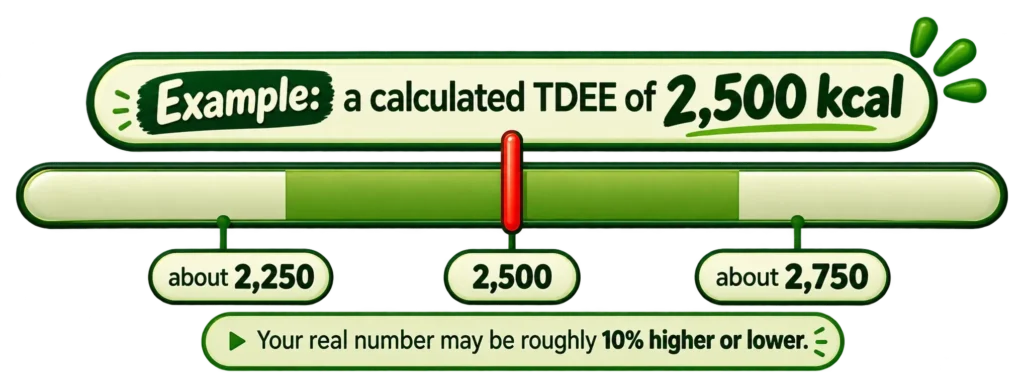
Our calculator uses published formulas, and real calorie needs can differ by around 10% or more. Use your result as a starting point and adjust it after 2-3 weeks based on how your body responds.
3. Talk to a Professional First
Please speak with a doctor or registered dietitian before changing your diet or exercise, especially if you are pregnant or breastfeeding, under 18, managing a medical condition, taking medication, or have ever struggled with an eating disorder. Do not go below about 1,200 kcal (women) or 1,500 kcal (men) per day without medical supervision. If you feel dizzy, faint or unwell, stop and seek medical help. In an emergency, contact your local emergency services.
Special Groups
Pregnancy and breastfeeding. Energy and nutrient needs change significantly. Do not use calorie targets for weight loss during pregnancy or breastfeeding unless your doctor advises it.
Children and teenagers. Growing bodies need enough energy and nutrients to develop properly. This calculator is not designed for anyone under 18.
Older adults. Muscle mass, appetite and health needs change with age. Older adults should check with a doctor or dietitian before reducing calories.
Athletes and very active people. Heavy training, competition and body composition goals may need personalised advice from a sports dietitian.
Weight Management and Realistic Expectations
Healthy and sustainable change is usually gradual. Body weight naturally moves up and down from day to day because of water retention, salt intake, hormones, digestion, sleep and the timing of meals. For this reason, we encourage you to look at weekly or monthly trends instead of reacting to a single weigh-in.
A calorie deficit may be used by some people for weight loss and a calorie surplus for weight gain or muscle building, but whether this is appropriate for you is a medical and personal decision. This website does not promote rapid weight loss or rapid weight gain, and no calculator, plan or article here can promise a specific rate of change or outcome.
Eating Disorders and Healthy Relationship With Food
Counting calories is not helpful for everyone. If tracking food makes you anxious, guilty or unable to enjoy meals, if you skip meals or restrict food to extremes, or if you think you may have an eating disorder, please stop using calorie tools. Speak to a doctor, a mental health professional or someone you trust as soon as you can. Support is available, and asking for help is a sign of strength. Your wellbeing is more important than any number.
Exercise Safety
Information about activity levels and exercise on this website is general. Before starting or increasing exercise, especially if you have been inactive, have a health condition, are older or have had an injury, check with a doctor. Start gradually, warm up, stay hydrated and stop if you feel pain, chest discomfort, shortness of breath or dizziness.
Supplements, Diet Products and Special Diets
We do not give advice about vitamins, supplements, herbal products, weight-loss pills, fat burners or medicines. These products can cause side effects and may interact with medication or medical conditions. Always speak with a doctor or pharmacist before using them.
Special diets, including very low-calorie diets, ketogenic diets, intermittent fasting and elimination diets, may not be suitable for everyone and should be discussed with a qualified professional first. Mention of any diet on this website is not an endorsement.
Food Allergies and Intolerances
Food examples and calorie values on this website are approximate. They do not account for allergies, intolerances or religious, cultural or personal dietary needs. Always check food labels and ingredients yourself, and follow the advice given by your healthcare provider.
Information From Research and Third Parties
Our guides may refer to published formulas, studies and public health information. Science changes over time, and different experts may reach different conclusions. Third-party websites and sources are not controlled by us, and we cannot guarantee that they are accurate or current.
Check With a Professional First
Please talk to a doctor or dietitian before changing your eating or exercise habits, particularly if you:
- are pregnant or breastfeeding
- are under 18
- have a medical condition or take regular medication
- have a history of disordered eating
As a general safety guide, avoid eating below roughly 1,200 kcal per day (women) or 1,500 kcal per day (men) unless a medical professional is supervising you.
Speak With a Professional Before Changing Your Diet or Exercise
Please consult a doctor or registered dietitian before you change your eating habits or exercise routine, especially if you:
- are pregnant, trying to conceive or breastfeeding
- are under 18 years old
- are older and have lost weight or appetite unintentionally
- live with a medical condition
- take prescription medicines or supplements
- have ever had an eating disorder or disordered eating patterns
- are recovering from surgery, injury or serious illness
As a general safety guide, do not eat below approximately 1,200 kcal per day (women) or 1,500 kcal per day (men) unless you are under medical supervision. These are not targets or recommendations for any individual. Many people need considerably more, and the right level depends on your own health situation.
If you feel dizzy, faint, unusually weak or unwell at any time, stop and seek medical help. In an emergency, contact your local emergency services immediately.
No Doctor–Patient or Dietitian–Client Relationship
Visiting this website, using the calculator, reading our articles or contacting us does not create a doctor-patient, dietitian-client, coaching or any other professional relationship. We are not a medical provider. We cannot give personal medical advice, assess your condition or review your health details by email or message.
Health Conditions That Can Change Your Calorie Needs
A general TDEE calculator may be unreliable if you have, or are being treated for, any of the following:
- diabetes, prediabetes or blood sugar problems
- thyroid conditions, such as hypothyroidism or hyperthyroidism
- polycystic ovary syndrome (PCOS)
- heart disease or high blood pressure
- kidney disease
- liver disease
- digestive conditions, such as celiac disease, inflammatory bowel disease or malabsorption
- cancer or recovery from major illness or surgery
- hormonal treatment
- medicines that affect appetite, body weight or metabolism
In these situations your calorie and nutrient targets should be set together with a qualified healthcare professional who can see your full medical picture.
Accuracy and Updates
We work to keep the information on this website accurate, clear and useful. However, we make no guarantee that it is complete, error-free or suitable for your situation. We may update calculators, content and this disclaimer at any time without notice. Please review this page from time to time.
Liability and Contact
We work to keep our information accurate, but we cannot guarantee it suits your situation. To the fullest extent allowed by law, we are not liable for any loss or harm from using this website or relying on its content. See our Terms of Use and Privacy Policy. Questions? Email tdeescalculator.com.