Calories per Gram of Protein, Carbs and Fat: The 4-4-9 Rule Explained
You tracked your meal, added up the macros, and the total doesn’t match the calories on the label. Frustrating, but it’s normal, and the fix is one simple formula.
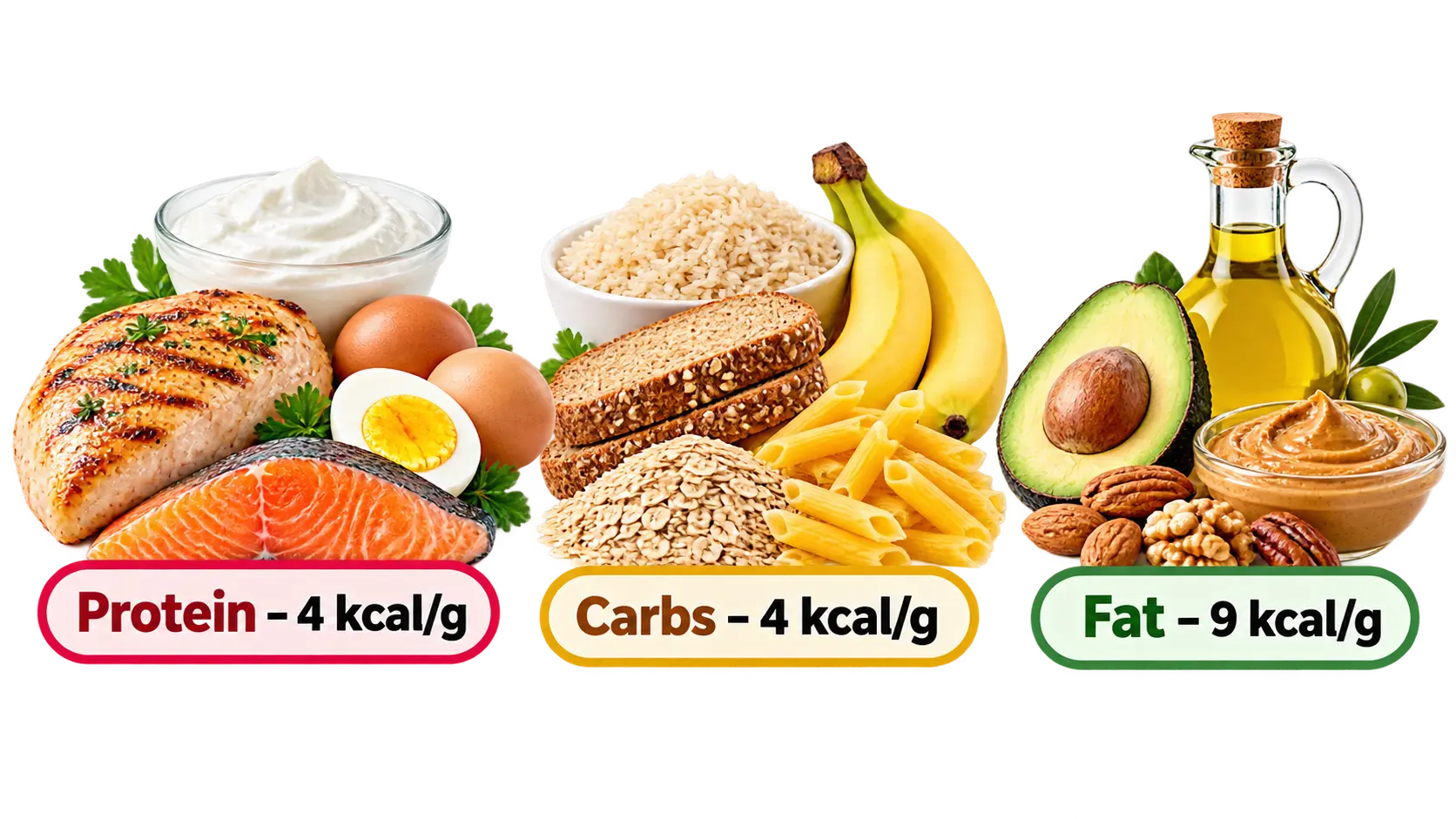
Protein and carbohydrates provide 4 calories per gram, fat provides 9 calories per gram, and alcohol provides 7 calories per gram. This guide shows how those numbers work, where they come from, and how to calculate calories from macros accurately.
Calories per Gram Chart
|
Nutrient |
kcal per gram |
kJ per gram |
kcal per 10 g |
|
Protein |
4 |
17 |
40 |
|
Carbohydrates |
4 |
17 |
40 |
|
Fat |
9 |
37 |
90 |
|
Alcohol |
7 |
29 |
70 |
|
Fiber (approx.) |
0-2 |
0-8 |
0-20 |
This is the 4-4-9 rule in nutrition. A “calorie” on a food label means a kilocalorie (kcal), and 1 kcal equals about 4.184 kJ.
Protein Calories per Gram
Protein has 4 calories per gram. A 150 g chicken breast with about 45 g of protein supplies roughly 180 kcal from protein.
If you’re asking how many calories in a gram of protein: about 4 kcal. Protein is also the most “expensive” macro to digest. The thermic effect of food (TEF) for protein is roughly 20-30% of its calories, compared with 5-10% for carbs and 0-3% for fat. So the net energy you get from protein is a bit lower than the label suggests.
Carbs Calories per Gram
Carbohydrates have 4 calories per gram. If you’re wondering how many calories per gram of carbohydrates, the answer is 4 kcal for digestible carbs such as sugar and starch.
Fiber is different. It is only partly fermented by gut bacteria, so it gives roughly 0-2 kcal per gram. Many regions (like the EU) assign 2 kcal/g to fiber, while others allow you to subtract it from total carbs.
Fat Calories per Gram
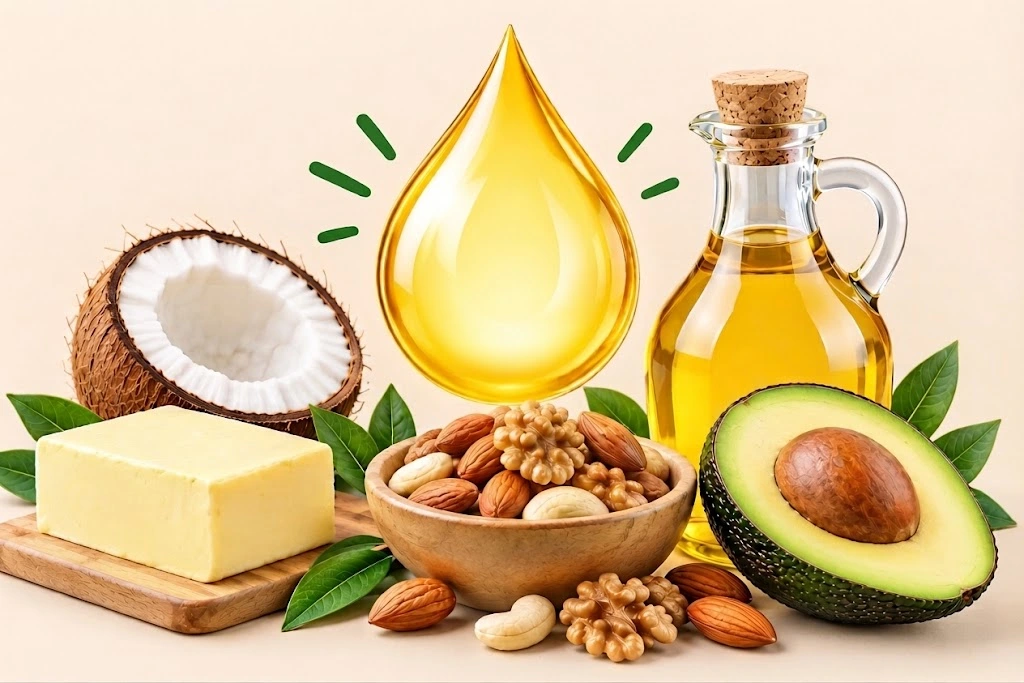
Fat has 9 calories per gram, more than double protein or carbs. How many calories in a gram of fat? Nine. A tablespoon of olive oil (about 14 g) has roughly 120 kcal, which is why oils, nuts, butter and fried foods are called calorie-dense.
Why Does Fat Have 9 Calories per Gram?
Fat molecules are made mostly of carbon-hydrogen bonds with very little oxygen. Your body gets more usable energy when it breaks down these “highly reduced” bonds than it gets from carbs or protein, which already contain more oxygen.
Why does protein have 4 calories per gram, and carbs too? The 4-4-9 values come from the Atwater system, developed by chemist Wilbur Atwater in the late 1800s. He measured the heat released by burning foods, then adjusted for what the body actually digests and absorbs. The factors are averages, which is why they are rounded.
Alcohol Calories per Gram
Alcohol has about 7 calories per gram. It is not a macronutrient because your body doesn’t need it, but it still supplies energy, sitting between carbs and fat. Drinks, especially cocktails with sugary mixers, can add hundreds of “empty” calories quickly.
How to Track Your Daily Movement
You don’t need specialized equipment to begin understanding your activity habits.
A smartphone or activity tracker can provide an approximate daily step count. Recording your general routine can also help you notice changes.
For example, compare your movement on working days, weekends, and days spent mainly at home.
Instead of worrying about the exact calories recorded by a smartwatch, look for consistent patterns.
Remember that step counts don’t capture every type of movement, and consumer devices cannot measure all energy expenditure precisely.
How to Burn More Calories Without Exercise
Wondering how to increase NEAT naturally without spending hours at the gym? The good news is that simple lifestyle changes can help you increase daily calorie burn and support your overall Total Daily Energy Expenditure (TDEE). By adding more everyday movement to your routine, you can improve your non-exercise activity thermogenesis (NEAT) without following a complicated workout plan.

1. Take Short Walking Breaks
If you spend long hours studying or working at a computer, taking short walking breaks is an easy way to increase NEAT throughout the day.
Standing up, stretching, and walking for a few minutes between tasks can reduce prolonged sitting and contribute to your daily energy expenditure
2. Walk During Phone Calls
This Small habit adds non-exercise physical activity to your routine and helps you stay active during the day.Walking while talking on the phone is one of the simplest ways to burn more calories without exercise.
Instead of sitting during every conversation, move around your room or walk in a safe space.
3. Use Stairs When Practical
Taking the stairs instead of an elevator is a practical way to increase daily physical activity.
Climbing stairs requires energy and can contribute to your total daily calorie burn. Even small changes in your movement habits can help increase NEAT over time.
Choose stairs when they are safe and suitable for your physical abilities.
4. Stay Active During Household Tasks
Everyday activities such as cleaning, gardening, organizing your home, and carrying groceries can help you increase NEAT without going to the gym.
These activities require physical movement and contribute to your daily calorie expenditure.
Although each task may burn a relatively small number of calories, regular movement throughout the day can make a meaningful contribution to your overall activity level.
5. Add Walking to Your Daily Routine
Adding more walking to your daily schedule is a simple way to increase NEAT and support weight management.
Try taking a short walk after meals, walking between study sessions, or choosing to walk for nearby errands when practical.
You don’t need to reach a specific step count immediately. Start with manageable movements and gradually build consistent habits that support a more active lifestyle and higher daily energy expenditure.
Does NEAT Affect TDEE Calculator Results?
Most online TDEE calculators estimate calorie requirements using personal information and an activity multiplier.
That multiplier attempts to account for movement throughout the day, including exercise and ordinary activity.
The challenge is that two people who select the same activity category may still have different movement patterns.
A person who exercises several times per week but otherwise sits all day might have different calorie requirements from someone who walks regularly throughout their working hours.
This is why a calculator should be treated as a starting estimate rather than an exact measurement.
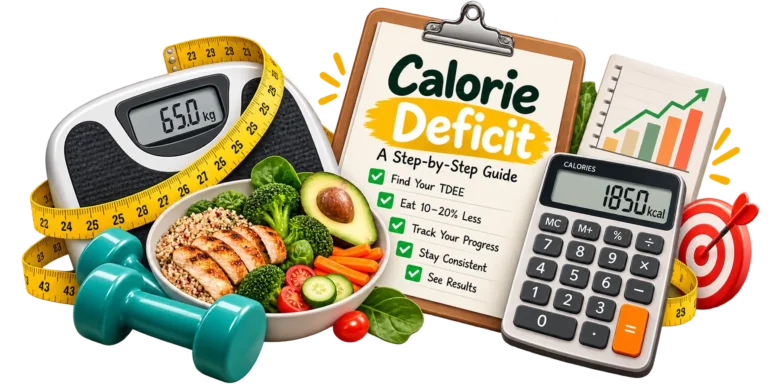
You can use a TDEE Calculator to estimate your daily calorie needs, then compare that estimate with your actual weight trend over several weeks.
NEAT vs Exercise: What’s the Difference?
Exercise involves intentional physical activity, such as cycling, strength training, swimming, or running.
NEAT involves movement outside those planned exercise sessions.
Consider two daily routines.
Person A: Completes a 45-minute gym workout but spends most of the remaining day seated.
Person B: Doesn’t attend the gym that day but walks frequently, performs household chores, and has a physically active job.
Person B could expend more activity-related energy across the whole day, depending on the intensity and duration of each person’s movements.
This doesn’t mean exercise is unnecessary. Structured exercise provides important benefits for cardiovascular fitness, strength, and overall health.
The point is that a single workout doesn’t describe your entire activity level.
How to Calculate Calories from Macros
Formula:
Calories = (Protein g × 4) + (Carbs g × 4) + (Fat g × 9)
Example 1: One meal
30 g protein, 50 g carbs, 15 g fat
Protein: 30 × 4 = 120 kcal
Carbs: 50 × 4 = 200 kcal
Fat: 15 × 9 = 135 kcal
Total = 455 kcal
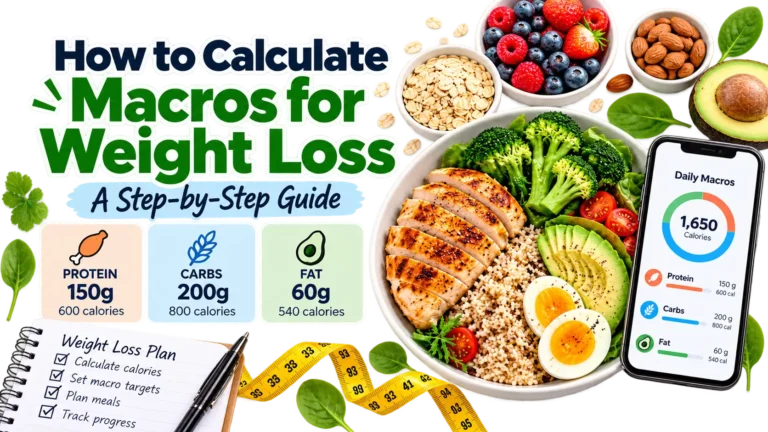
Example 2: Grams to calories for a full day (2,000 kcal, 30/40/30 split)
|
Macro |
Share |
Calories |
Grams |
|
Protein |
30% |
600 |
150 g |
|
Carbs |
40% |
800 |
200 g |
|
Fat |
30% |
600 |
~67 g |
Example 3: Add alcohol
One drink with 14 g of alcohol = 14 × 7 = 98 kcal on top of your macros.
You can build a simple macro calorie calculator or protein carbs fat calculator in Excel or Google Sheets using the same formula.
Why Food Labels Sometimes Don’t Add Up
- Rounding: Brands round each gram value separately.
- Fiber rules: Some countries count fiber as 2 kcal/g, others as 0.
- Sugar alcohols (polyols): Typically about 2.4 kcal/g, with erythritol close to 0.
- Specific vs general factors: Manufacturers may use food-specific Atwater factors instead of 4-4-9.
- Water and ash: These carry no calories but add weight.
A difference of 5-10% is normal and not a reason to worry.

Practical Tips
- Use 4-4-9 to double-check any calorie-tracking app.
- Measure oils, nut butters and dressings, because fat adds up fastest.
- Prioritize protein for satiety and muscle maintenance.
- Count liquid calories (juice, soda, alcohol).
- Treat the numbers as estimates, not lab-exact values.
Frequently Asked Questions
Final Thoughts
NEAT (Non-Exercise Activity Thermogenesis) is a reminder that your body uses energy far beyond the time you spend exercising. Everyday movement plays an important role in your daily calorie burn and overall energy expenditure.
Whether you’re walking between classes, cleaning your home, climbing stairs, or moving during work, these activities help increase NEAT naturally and contribute to your total daily energy expenditure (TDEE).
You don’t need to turn every movement into a workout. A more practical goal is to develop an active lifestyle that includes regular, comfortable movement throughout the day to burn more calories without exercise.
Understanding NEAT and TDEE can help you make more informed decisions about your daily calorie needs, physical activity, and long-term weight management.