
What Is TDEE and Why Does It Matter for Weight Loss?
You eat smaller portions, avoid sugary drinks, and try to stay active. But when you step on the scale, the number barely changes. Meanwhile, someone you know seems to lose weight without following a strict diet.
It’s frustrating, especially when you feel like you’re doing everything right.
The truth is that everyone’s body needs a different amount of energy. What works for one person may not work for another, even if they follow similar eating habits.
That’s where TDEE for weight loss becomes useful.
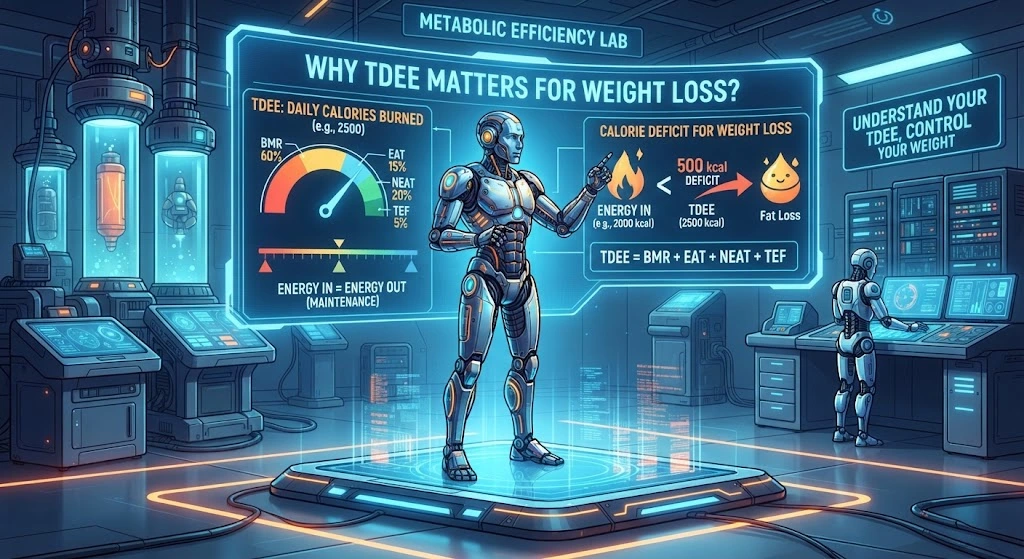
TDEE stands for Total Daily Energy Expenditure. In simple terms, it’s an estimate of how many calories your body burns in a day. Understanding this number can help you figure out how much to eat, why your progress might slow down, and how to make changes without following an unnecessarily restrictive diet.
Let’s look at what TDEE actually means for your weight-loss goals and how you can use it in everyday life.
What Is TDEE in Simple Terms?
Think of TDEE as your body’s daily energy budget.
Your body needs calories to keep your heart beating, your brain working, and your organs functioning. It also uses energy when you walk, prepare meals, exercise, or simply move around the house.
All that energy adds up to your Total Daily Energy Expenditure (TDEE).
For example, if your body burns approximately 2,300 calories a day, eating around that amount may help maintain your current weight over time.
When you consistently consume less energy than your body uses, you create a calorie deficit. That deficit is what makes weight loss possible.
But your TDEE isn’t an exact number that stays the same forever. It can change depending on your activity, body weight, and other factors.
Understanding this basic idea is much more useful than blindly following a diet that tells everyone to eat the same number of calories.
Why Does TDEE Matter for Weight Loss?
One of the biggest mistakes people make when trying to lose weight is choosing a calorie target without knowing how much energy their body actually needs.
You might see a diet recommending 1,500 calories a day and assume it’s suitable for you. But what if your body usually burns 2,800 calories? That could create a much larger deficit than you intended.
On the other hand, if your daily energy needs are relatively low, the same diet might produce a very different result.
Knowing your TDEE helps you make a more informed decision instead of guessing.
It Gives You a Starting Point for Your Calories
When you understand your estimated maintenance calories, you can choose a calorie intake that better matches your goals.
You don’t have to copy someone else’s meal plan or cut out entire food groups just because they’re doing it.
Instead, you can make changes based on your own estimated energy requirements.
It Makes Your Weight-Loss Plan More Realistic
Losing weight doesn’t mean you need to feel hungry all day.
A plan that leaves you constantly exhausted or thinking about food may be too difficult to maintain.
Using your TDEE as a starting point can help you choose a moderate calorie deficit rather than making extreme changes.

It Helps You Understand Your Results
Not every slow week means your plan has stopped working.
Your body weight can fluctuate, your activity may change, and your energy needs may gradually decrease as you get lighter.
Knowing how TDEE relates to weight loss helps you review these changes instead of reacting to every number on the scale.
How to Use TDEE to Lose Weight: A Real-Life Example
Imagine Sarah works in an office. She spends most of her day sitting, takes a short walk in the evening, and wants to lose some weight without giving up all her favorite foods.
She uses a TDEE calculator and gets an estimated maintenance level of 2,200 calories per day.
Rather than immediately choosing an extremely low-calorie diet, she decides to begin with a smaller reduction.
Here’s what her plan might look like:
| Daily plan | Calories |
|---|---|
| Estimated maintenance calories | 2,200 |
| Planned calorie intake | 1,850 |
| Estimated calorie deficit | 350 |
Sarah aims to eat around 1,850 calories while keeping her usual activity level.
She focuses on filling meals, includes protein and vegetables, and pays attention to portions rather than banning specific foods.
After a few weeks, she reviews her average weight trend and how she feels.
If her weight is gradually decreasing and she feels well, she may not need to change anything.
If her weight is not moving as expected, she can review her food intake, activity, and initial calorie estimate before making adjustments.
The important point is that a TDEE calculation gives Sarah a starting estimate, not a guaranteed weight-loss result.
Her actual energy requirements may be higher or lower than the calculator predicts.
How Much Should You Eat Below Your TDEE?
This is one of the most common questions people have when learning about calorie deficits.

For some adults, a reduction of approximately 300–500 calories below estimated daily energy needs may be a reasonable starting approach.
However, there isn’t one deficit that works safely or effectively for everyone.
Your body size, current calorie requirements, activity level, medical history, and nutritional needs all matter.
A person with a relatively low TDEE may need a smaller deficit than someone with much higher energy requirements.
Why a Bigger Deficit Isn’t Always Better
It may seem logical that eating much less will help you lose weight faster.
But an overly restrictive approach can have downsides.

You may experience stronger hunger, low energy, difficulty concentrating, or trouble staying consistent with your plan. Severe restriction can also increase the risk of inadequate nutrient intake and muscle loss.
A more useful question is not, “How little can I eat?”
It’s, “What calorie target can I follow while staying healthy, active, and properly nourished?”
For many people, a smaller, manageable deficit is easier to maintain than an aggressive short-term diet.
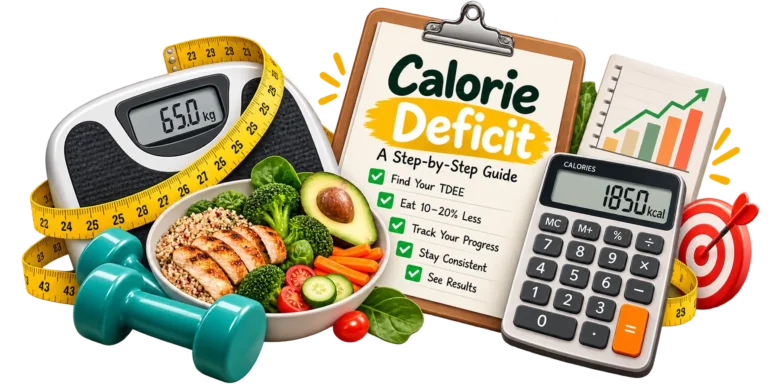
[IMAGE 1 — Insert here: Sustainable calorie deficit visual]
Why You Might Not Lose Weight Even When Eating Below TDEE
You’ve calculated your calories, followed your plan, and expected to see progress.
Then a week goes by, and the scale hasn’t moved.
Before cutting your calories further, consider what might be happening.

1. Your Calculator Result Is an Estimate
An online calculator cannot know your exact daily energy expenditure.
Two people with similar physical measurements may still burn different amounts of energy because of differences in movement, body composition, and other factors.
If your estimated TDEE is higher than your actual energy needs, your calorie deficit might be smaller than you think.
2. Small Extras Can Add Up
A spoonful of cooking oil, a sweetened coffee, a few bites while preparing dinner, or an extra sauce may seem insignificant.
But these foods and drinks still contribute calories.
You don’t need to obsess over every bite. However, if you’re tracking calories, it’s useful to include the ingredients and drinks that are easy to overlook.
3. Water Retention Can Hide Progress
Your body weight includes much more than fat.
Water, food in your digestive system, and other normal changes can affect what you see on the scale.
Salty meals, changes in carbohydrate intake, hormonal fluctuations, and temporary inflammation after exercise can all influence short-term weight readings.
That’s why comparing your weight on just two individual days rarely tells the full story.
4. Your Weekend Habits May Be Different
Suppose you eat less than your estimated maintenance calories from Monday to Friday but consume substantially more on Saturday and Sunday.
Your overall weekly deficit may be smaller than expected or disappear altogether.
You don’t have to avoid restaurants or celebrations to lose weight. It simply helps to understand how your usual eating patterns fit into the bigger picture.
5. Your Daily Activity Has Changed
Sometimes people move less without realizing it.
You may skip walks because you’re busy, spend more hours sitting, or feel less energetic while eating fewer calories.
These changes can reduce daily energy expenditure and affect your progress.
The solution isn’t always to eat less. Sometimes it’s better to review your routine and look at what has changed.
How to Track Your Weight-Loss Progress Without Guesswork
A calculator can help you choose a starting calorie target, but your progress over time gives you more useful information.
Instead of judging your results after a single day, observe the overall pattern.
Step 1: Record a Starting Point
If weighing yourself feels appropriate, record your weight under consistent conditions.
For example, you might weigh yourself in the morning, after using the bathroom and before breakfast.
Using similar conditions makes your measurements easier to compare.
Step 2: Look at Your Average Weight
Your weight may increase one morning and decrease the next.
That’s normal.
If you weigh yourself several times during the week, compare weekly averages instead of focusing on individual readings.
You can also track waist measurements, clothing fit, and changes in your physical fitness.
Step 3: Review Your Progress Over Several Weeks
Give your plan enough time to reveal a meaningful trend.
For many people, around two to four weeks of reasonably consistent records is more informative than a few days.
If your average weight is gradually decreasing, your current approach may be working.
If your weight is stable over several weeks, consider whether your energy intake and expenditure are closer than you originally estimated.
Step 4: Make One Change at a Time
You don’t need to completely change your diet every time progress slows.
Review your tracking accuracy, daily movement, and routine first.
If an adjustment is appropriate, make a modest change and observe the result instead of drastically reducing calories.
[IMAGE 2 — Insert here: Weight-loss progress tracking visual]
Why Weight Loss Often Slows Down Over Time
You may have noticed that losing the first few kilograms sometimes feels easier than losing the next few.
This doesn’t necessarily mean you’re doing something wrong.
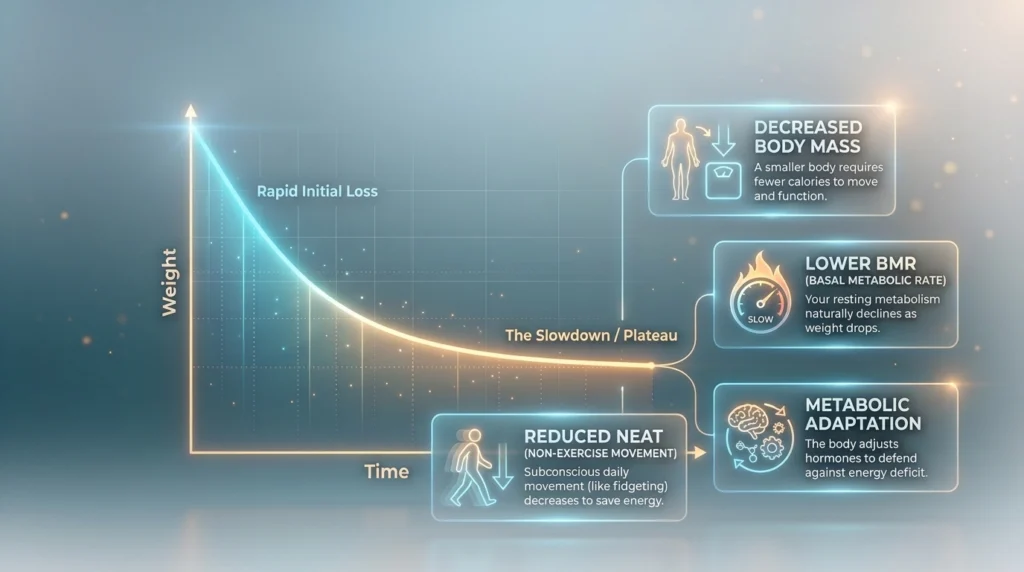
As your body becomes lighter, it generally uses less energy to move and maintain itself.
Your daily calorie needs may also change because of shifts in activity, body composition, and metabolic adaptation.
For example, a calorie intake that created a noticeable deficit when you were heavier may create a smaller deficit after you’ve lost weight.
This is one reason your weight-loss results may slow down over time.
Should You Keep Reducing Your Calories?
Not automatically.
A slower rate of weight loss isn’t always a problem, especially if you feel well and your overall trend is still moving in the intended direction.
Before reducing your intake, check whether your recent measurements reflect a real plateau or normal short-term fluctuations.
If your weight has remained stable over a sustained period, you may need to reassess your calorie target, daily activity, or overall goals.
Remember that keeping weight off and maintaining healthy habits are meaningful outcomes too.
How to Make Your Calorie Deficit Easier to Maintain
A calorie target is only useful if you can follow it in real life.
You still have work, family responsibilities, social events, and days when you don’t feel like cooking.
That’s why practical eating habits matter just as much as choosing a number.

Build Meals That Keep You Satisfied
Meals containing protein, fiber-rich foods, and a variety of nutritious ingredients can help you feel satisfied while meeting your nutritional needs.
For example, you might combine eggs or yogurt with fruit at breakfast, or prepare a meal with chicken, lentils, vegetables, and rice.
You don’t need expensive diet foods or complicated recipes.
Keep Your Favorite Foods in Perspective
A sustainable eating plan doesn’t have to ban bread, rice, pasta, or occasional desserts.
Portion sizes, overall nutritional quality, and your total eating pattern are more important than labeling individual foods as completely good or bad.
Making room for foods you enjoy can make a plan easier to follow over time.
Find Movement You Actually Enjoy
You don’t need to spend hours in the gym every day.
Walking, cycling, dancing, gardening, or playing a sport can all contribute to physical activity.
Choose something that fits your routine.
A short walk you can repeat consistently is often more useful than an ambitious workout schedule you abandon after a week.
Include Strength Training When Possible
During weight loss, the goal is often to reduce excess body fat while preserving muscle.
Strength training, combined with appropriate nutrition, can help maintain lean body mass.
You can begin with exercises suitable for your ability and gradually progress.
Make Sleep and Recovery Part of the Plan
Sleep and stress can influence hunger, food choices, and your ability to stay active.
While better sleep doesn’t automatically create a calorie deficit, it can make healthy routines easier to maintain.
[IMAGE 3 — Insert here: Balanced meals and sustainable lifestyle visual]

Should You Follow the Same Calorie Target Every Day?
Not necessarily.
Some days you’re more active. Other days you’re sitting at your desk for long periods.
Your actual energy expenditure changes from day to day, even if your estimated TDEE is based on an average activity level.
Many people find it easier to follow a consistent calorie target because it simplifies meal planning.
Others prefer slightly different intakes depending on their schedules.
Either approach can work if your overall calorie intake supports your goals and you meet your nutritional needs.
You don’t need to calculate a completely new TDEE every morning.
It’s generally more practical to use a reasonable estimate, follow a sustainable routine, and review your longer-term progress.
Can You Lose Weight Without Going to the Gym?
Yes. Gym membership is not a requirement for weight loss.
A sustained calorie deficit can lead to weight loss even without structured workouts.
However, physical activity provides benefits that extend beyond the number on the scale.
Regular movement supports cardiovascular health, strength, mobility, and long-term weight management.
If you don’t enjoy the gym, you can start with walking, home exercises, or other activities you prefer.
The aim is to build habits that fit your life, not force yourself into a routine you dislike.
When Should You Review Your TDEE for Weight Loss?
Your estimated calorie needs may need updating when your circumstances change.
For example, consider reviewing your TDEE if:
- You’ve lost a meaningful amount of weight.
- You have started or stopped regular exercise.
- Your job or daily routine has become significantly more or less active.
- Your weight trend has remained stable over several weeks despite consistent habits.
- Your health circumstances or nutritional needs have changed.
You don’t need to recalculate your TDEE after every small weight fluctuation.
Instead, use your estimate as a planning tool and update it when there’s a useful reason to do so.
If you’re unsure where to begin, try our TDEE Calculator to get an estimate of your daily calorie needs based on your personal information and activity level.
Frequently Asked Questions
Final Thoughts: Use TDEE as a Guide, Not a Rule
Understanding what TDEE is and why it matters for weight loss helps you approach calorie planning with more clarity.
You don’t need to chase the smallest possible calorie number or follow somebody else’s diet to make progress.
Start by estimating your energy needs. Choose realistic changes that fit your lifestyle. Pay attention to your progress over time, and be willing to adjust when your body or routine changes.
Most importantly, remember that successful weight management involves more than a number on a calculator.
Balanced nutrition, regular movement, adequate sleep, and consistent habits all contribute to long-term health.
Ready to find your starting calorie target? Use our TDEE Calculator to estimate your maintenance calories and plan your next steps.
Medical disclaimer: This article is for general educational purposes and is not personalized medical advice. Calorie restriction may be unsuitable without professional guidance for children and teenagers, pregnant or breastfeeding people, individuals with a history of eating disorders, or people with certain medical conditions.